
Snake Plant Anthracnose: Symptoms and Disease Biology
Snake plant anthracnose is a fungal disease caused by Colletotrichum sansevieriae — a fungus that, unlike most leaf-spot fungi, infects almost nothing besides Sansevieria. It starts as small, water-soaked lesions, develops a distinctive concentric-ring pattern with visible black fruiting bodies, and can enlarge into blighted patches within about two weeks in warm, humid conditions. Here is how to recognize it and what actually works to stop it.
If a brown spot on your snake plant has started developing a ringed, target-like pattern rather than staying as a simple flat mark, this is worth a closer look — that ring pattern is specific enough to point to one disease in particular.
What Is Snake Plant Anthracnose, Exactly?
Anthracnose here refers to a specific disease caused by Colletotrichum sansevieriae, a fungus first formally described infecting Sansevieria trifasciata in Japan. Since then it has been reported causing the same disease in Australia, India, South Korea, China, and Germany, and in the United States in Florida, Ohio, Tennessee, and Hawaii. California's Department of Food and Agriculture logged a detection in two San Diego County nursery greenhouses in 2016, assigning it a moderate "B" risk rating — present, but not established as a persistent problem in the state.
The detail worth knowing: this fungus has an unusually narrow host range. Most leaf-spot fungi that affect houseplants are generalists, capable of infecting a wide range of unrelated species. C. sansevieriae, as far as the research shows, is a specialist that targets Sansevieria specifically, rather than the wider Dracaena genus it now technically belongs to.
What Do the Symptoms Actually Look Like?
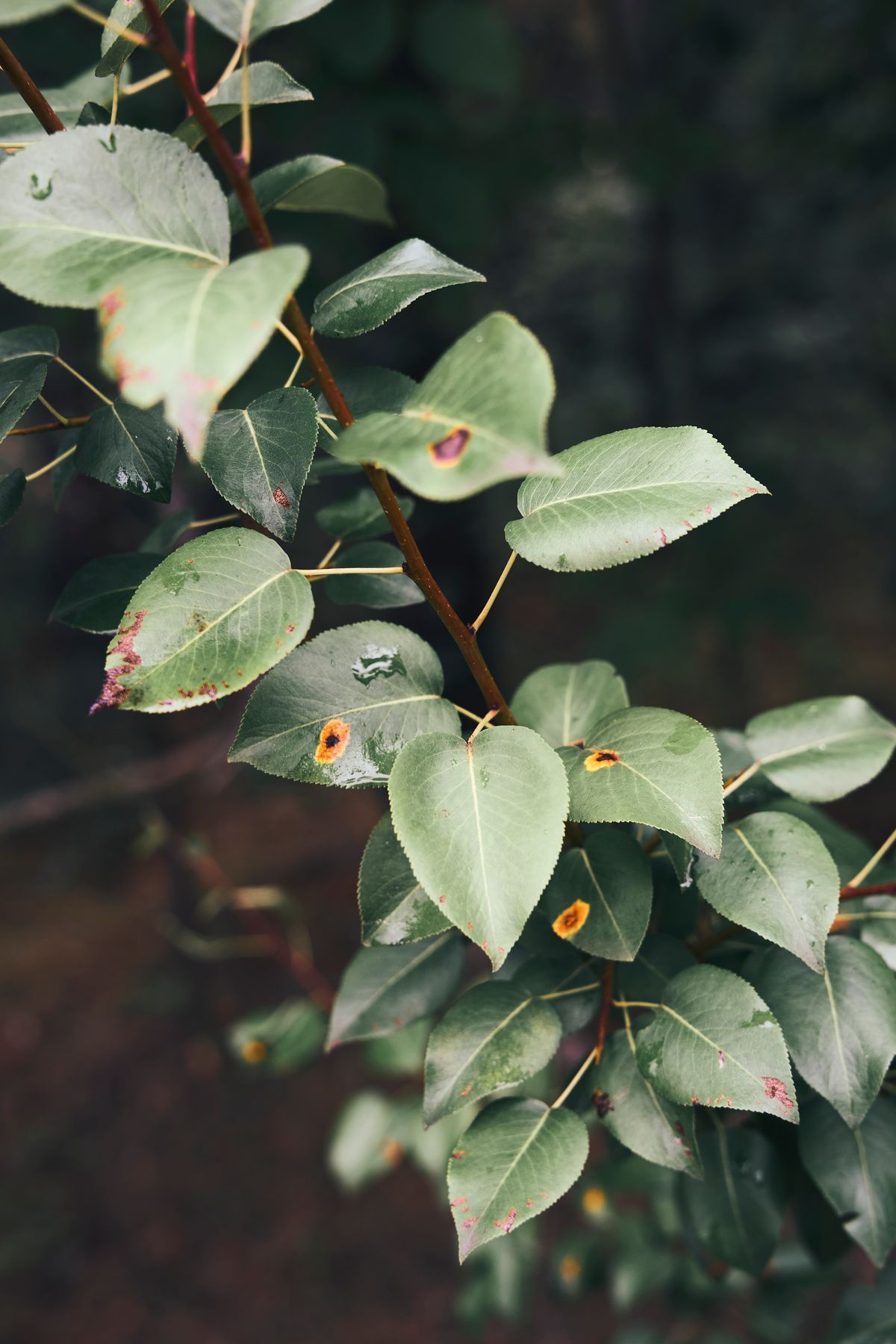
The disease has a recognizable progression, not just a single static appearance. It begins as small, round, water-soaked lesions on the leaf surface — patches that look slightly translucent and damp rather than simply discolored. As the lesion matures, dark concentric rings develop inside it: a target-like banding pattern created by the fungus producing structures called acervuli, small fruiting bodies that appear as tiny black dots arranged in rings.
Under humid, wet conditions, these lesions can produce a sticky, orange spore mass on the surface — a visible sign the fungus is actively sporulating and capable of spreading to other leaves or plants nearby. Left unaddressed, individual lesions enlarge and merge with neighboring ones, eventually producing large blighted patches rather than isolated spots.
How Is This Different From the Fungal Leaf Spot I Already Covered?
This is worth being precise about, because "fungal leaf spot" is not one disease. The Snake Plant Brown Spots guide covers a more common fungal pattern — typically caused by a different organism, Phoma draconis — that shows up as a yellow halo around a darker center and tends to progress slowly on individual older leaves.
Anthracnose is a separate, faster-moving disease. The lesion starts water-soaked rather than yellow, develops the concentric-ring-and-black-dot pattern described above rather than a simple halo, and — under the right conditions — spreads and coalesces into blight over roughly two weeks, rather than staying contained to isolated spots. If you matched your plant's spots to the yellow-halo pattern in that guide, this is probably not what you are looking at. If the pattern includes visible rings or an orange sticky residue, anthracnose is the more likely answer.
How Fast Does It Actually Spread?
Faster than most leaf diseases on this plant, and there is real data behind that claim. Research tracking infection under controlled conditions found water-soaked lesions appearing within 3 days of exposure, concentric rings and black acervuli forming by around day 9, and lesions coalescing into blighted patches by roughly day 14. That is a two-week window from first symptom to serious foliage damage, which is considerably faster than the slow, contained progression typical of the more common fungal leaf spot.
What Conditions Cause It to Develop?
Warm, humid, and consistently wet foliage. This fungus, like most in its genus, needs moisture on the leaf surface to germinate and spread — which is exactly why overhead watering, frequent misting, and crowded, poorly ventilated growing conditions are the practical risk factors, not the plant's general health or soil moisture.
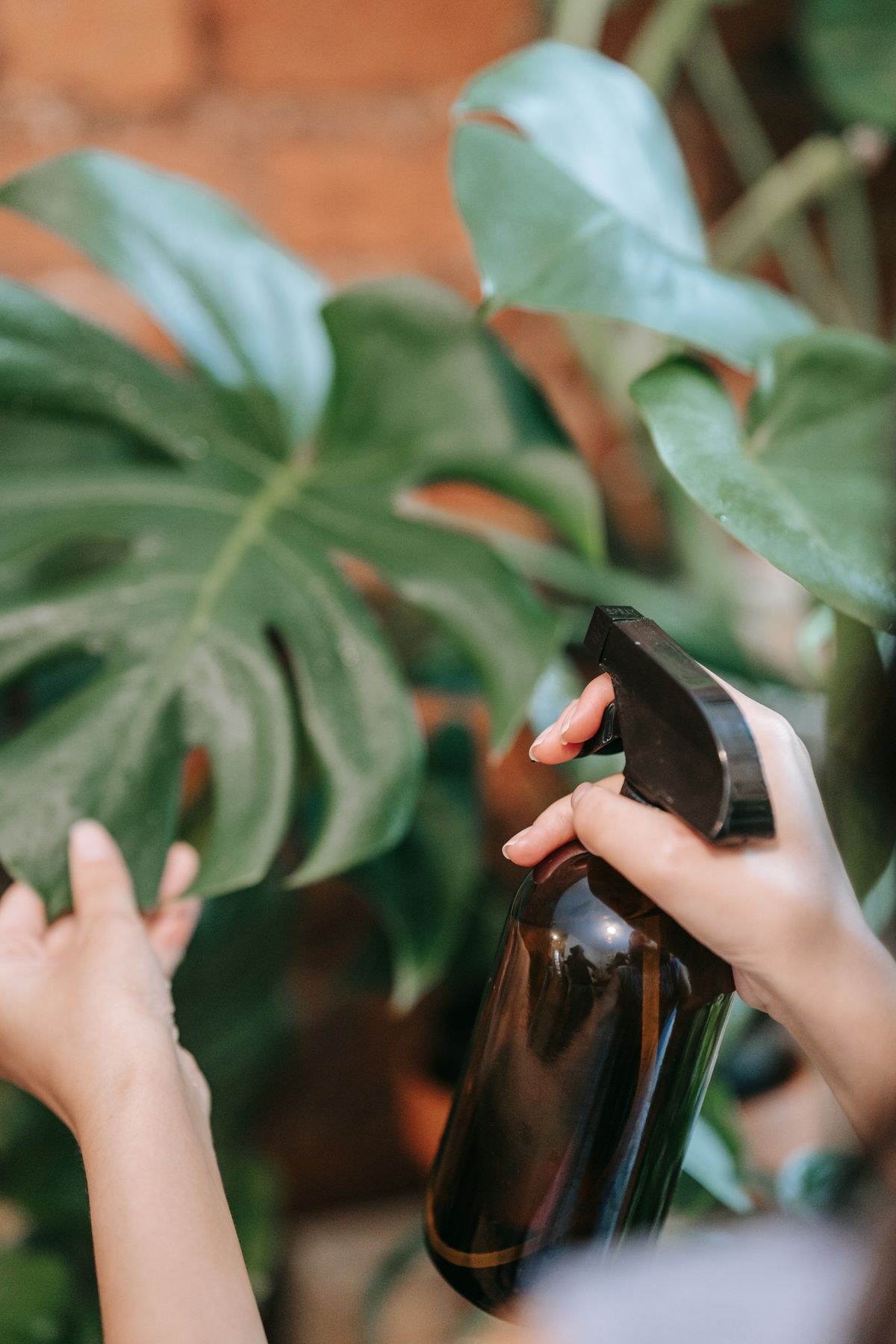
This plant does not need misting under any circumstances — it evolved in a rocky, low-humidity climate, and wetting the foliage does nothing for its health while creating exactly the conditions this fungus needs. If you have been misting a snake plant "to help it," stop. That single change removes the main favorable condition for this disease.
How Do You Actually Treat It?
Start with the free fix: remove and destroy any leaf showing lesions, stop wetting the foliage entirely, and water from the base rather than from above. Clemson HGIC's houseplant disease factsheet recommends this exact approach for anthracnose specifically — pick off and destroy infected leaves, and do not mist — before reaching for anything else. Improving airflow around the plant, especially if it is crowded against other pots, also reduces the humid microclimate the fungus needs.
If the disease persists after those steps, a fungicide is the next option: copper soap, chlorothalonil, myclobutanil, or tebuconazole, applied after infected material has already been removed. None of these work as a substitute for removing infected tissue and correcting the moisture problem — they are a follow-up measure, not the first move. For background on why this fungus is so specifically tied to Dracaena trifasciata and not other houseplants, the Sansevieria Trifasciata guide covers the species this disease targets, the Sansevieria Morphology guide covers the leaf tissue this fungus is actually damaging, and the Sansevieria Plant Botanical Guide covers the plant's broader biology.
Can the Plant Recover?
Leaf tissue that has already developed lesions will not heal or turn green again — that damage is permanent on the affected leaf. The plant as a whole, though, generally survives if you catch the disease early and remove infected leaves promptly. Most cases resolve at the level of "lost a few leaves," not "lost the plant." The exception is a severe, unaddressed case where blight has spread across a large portion of the foliage in prolonged humid conditions — at that point, be realistic about how much of the plant is salvageable rather than assuming every leaf can be saved.
If you have a spot with visible rings or a sticky orange residue right now, remove that leaf today, stop any misting, and let the plant dry out completely before you water again.
Care FAQ
What is snake plant anthracnose caused by?
A fungus called Colletotrichum sansevieriae, first formally described in Japan and now reported in Australia, India, South Korea, China, Germany, and several US states including Florida, Ohio, Tennessee, and Hawaii. It has an unusually narrow host range — as far as research shows, it infects Sansevieria almost exclusively, not the wider Dracaena genus.
What does snake plant anthracnose look like?
It starts as small, round, water-soaked lesions on the leaf. As it progresses, dark concentric rings appear inside the lesion — a target-like pattern caused by the fungus's fruiting bodies (acervuli). Under humid conditions, sticky orange spore masses can appear on the lesion surface. Left untreated, spots enlarge and merge into large blighted patches.
How is anthracnose different from regular fungal leaf spot on snake plants?
Regular fungal leaf spot on this plant (often caused by a different fungus, Phoma draconis) tends to stay as isolated yellow-ringed spots that spread slowly. Anthracnose lesions start water-soaked, develop a distinctive concentric ring pattern with visible black fruiting bodies, and can enlarge and merge into blighted patches within about two weeks under favorable conditions — a faster, more aggressive progression.
How fast does snake plant anthracnose spread?
Quickly, once conditions favor it. Research tracking the disease found water-soaked lesions appearing within 3 days of infection, concentric rings and black fruiting bodies forming by around 9 days, and lesions coalescing into blighted patches by roughly 14 days under warm, humid conditions.
Can a snake plant recover from anthracnose?
Individual leaf tissue that has developed lesions will not heal or turn green again. The plant as a whole typically survives if the disease is caught early and infected leaves are removed promptly. Left unchecked in warm, humid conditions, extensive blighting across many leaves is a more serious outcome and may affect the plant more broadly.
How do you treat anthracnose on a snake plant?
Remove and dispose of infected leaves, stop misting or wetting the foliage, water from below rather than overhead, and improve air circulation around the plant. For persistent cases, a copper-based fungicide or products containing chlorothalonil, myclobutanil, or tebuconazole can be applied after infected material is removed, following label directions.