
Why Do Variegated Snake Plant Cuttings Turn Green?
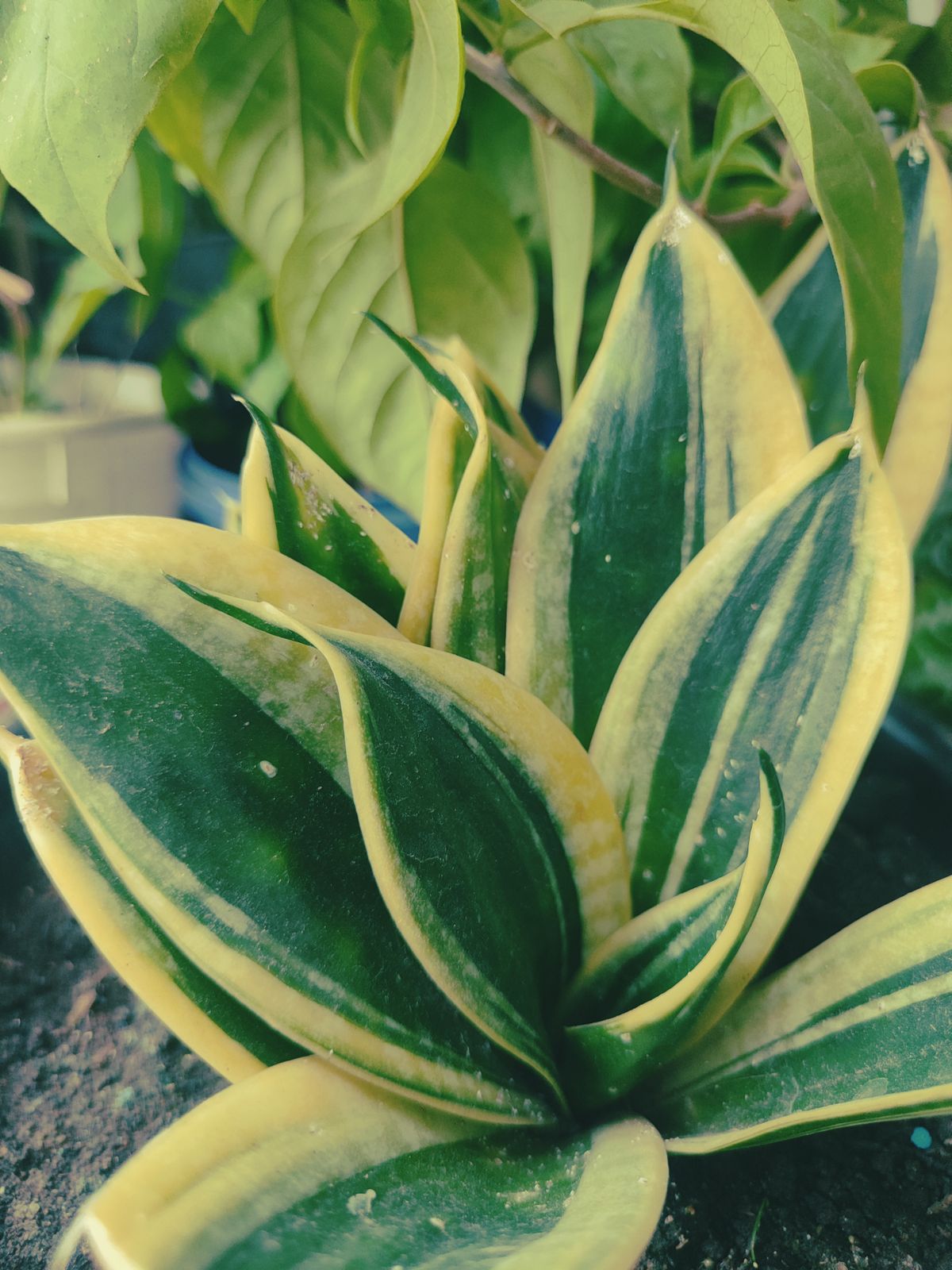
Variegated snake plant cuttings turn green because the yellow coloring exists only in the leaf's outermost cell layer, and that layer physically cannot contribute to the new plant a leaf cutting regenerates. This is not a mistake in technique or a matter of luck — it is a structural certainty. Division is the only propagation method that reliably keeps the color intact, because a division already carries a growing point that includes that outer layer.
A reader propagated her Sansevieria Laurentii from leaf cuttings — the same method that had worked on every other houseplant she owned. The cuttings rooted successfully. Every one of them came up solid green, with none of the gold edging that made the parent plant distinctive. She had not done anything wrong. She had run into a limit of plant biology that has nothing to do with how carefully the cutting was taken. (If you have not propagated a snake plant before, the Sansevieria Propagation guide covers all the methods and when each one makes sense.)
Why Do Variegated Snake Plant Cuttings Turn Green in the First Place?
Varieties like Laurentii are not uniformly variegated all the way through their tissue. The yellow color lives in one specific outer layer of cells, wrapped around a plain green interior. A leaf cutting only ever regenerates its new plant from that interior tissue — so the resulting pup was never going to be anything other than solid green, regardless of how the cutting was taken, cured, or rooted. (For the broader genetics of how this layered structure forms in the first place, and why some variegated patterns are far less stable than Laurentii's, see Chimeral Variegation in Snake Plants Explained.)
What a Periclinal Chimera Actually Is
The technical name for this structure is a periclinal chimera: a plant built from genetically distinct layers of cells stacked like sheets, with a color-producing mutation confined to just one of them. University of Illinois Extension's Home, Yard & Garden newsletter describes periclinal chimeras as occurring when a mutation affects "one complete meristem layer" — stable enough to be reliably propagated vegetatively, which is exactly why commercial variegated cultivars like Laurentii exist and stay consistent from plant to plant when divided correctly.
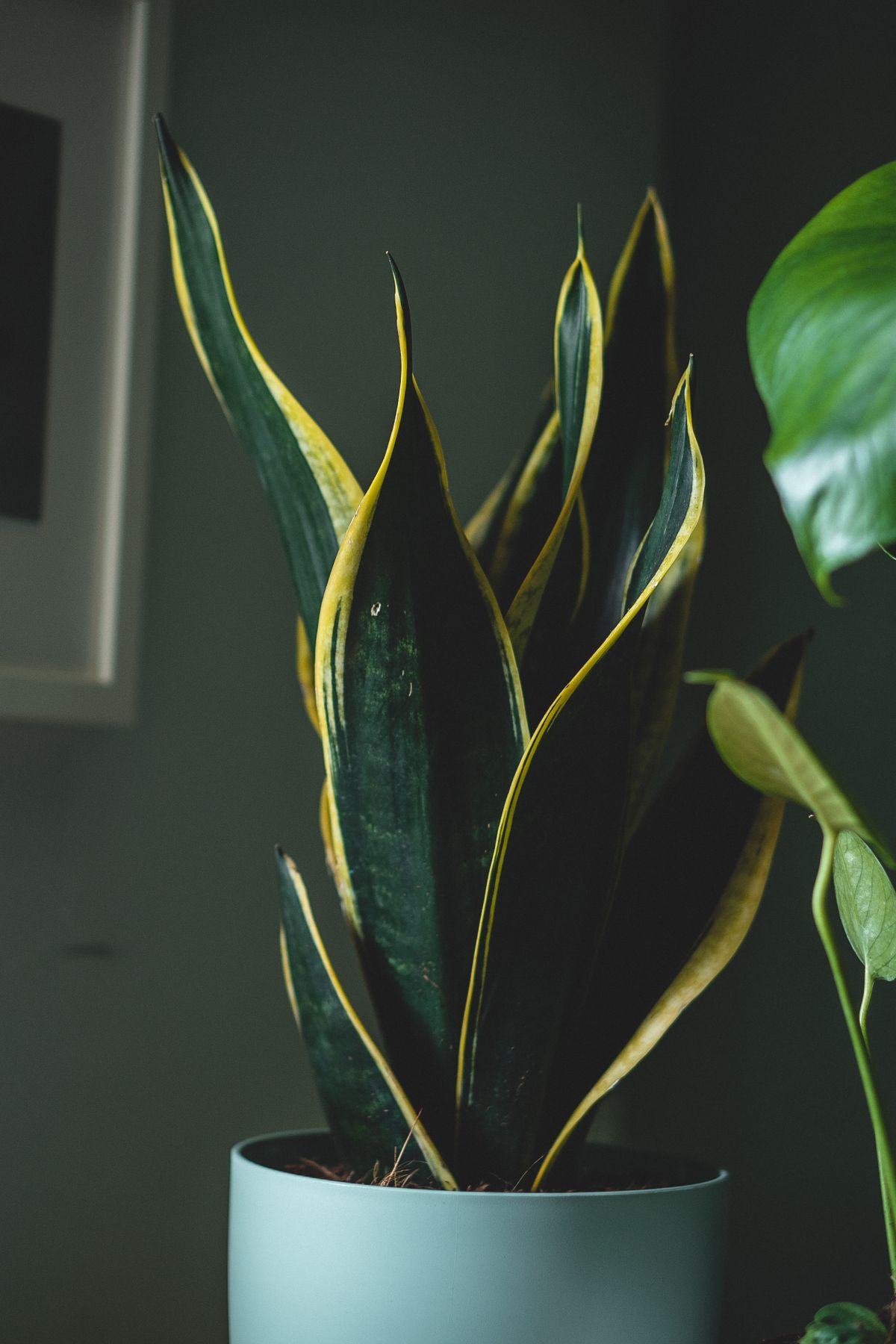
Plant biologists label these layers L1, L2, and L3 from the outside in. In Laurentii, the yellow margin belongs to the L1 layer — the outermost skin of the leaf. Research on periclinal chimera layer structure describes L1 as dividing only anticlinally — perpendicular to the surface, staying confined to a single sheet — while deeper tissue can divide more flexibly and contribute to entirely new structures. That distinction is the whole answer to why leaf cuttings fail to carry the color: L1 is built to stay put.
Why the Color Never Makes It Into a Leaf Cutting
When you take a leaf cutting, you are working with tissue that includes the L1 layer on its surface — but the new plant does not regenerate from L1. It regenerates from a fresh growing point that forms out of deeper, undifferentiated tissue in the cut leaf, tissue that was always L2 or L3 in origin and genetically plain green. L1's job is to be skin, not to found new plants. It divides to keep covering the surface it already occupies and does not generate the kind of new growing point a leaf cutting depends on.
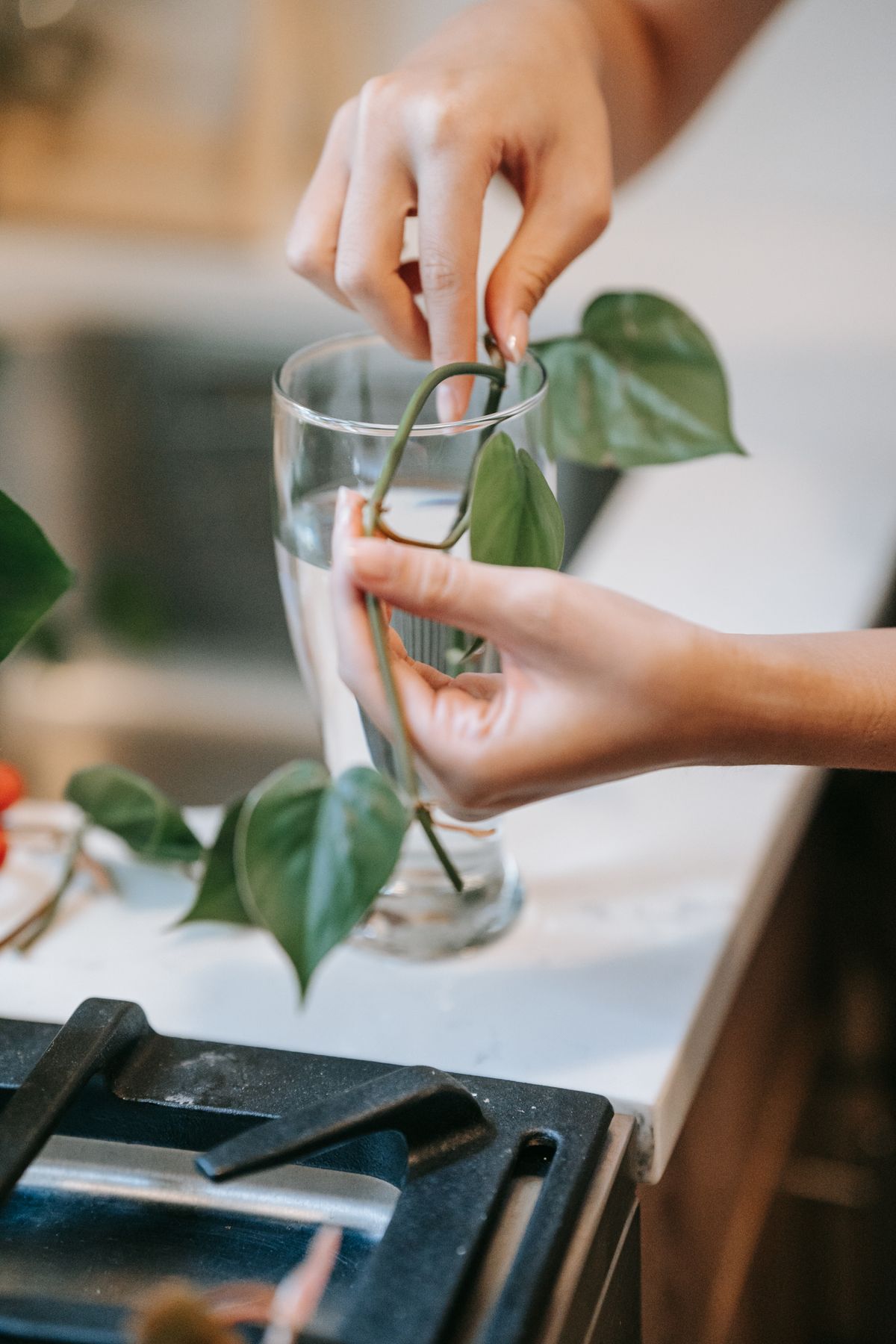
This is also why the same limitation does not apply to division. A rhizome division carries an already-established growing point forward intact — including whatever L1 tissue that growing point already has attached to it. Nothing has to regenerate from scratch. The Rhizome Division guide covers the full mechanics of why a division produces a structurally complete plant immediately, and the chimeral-preservation angle is really just one specific consequence of that same underlying fact.
Does This Happen to Every Variegated Cutting, or Just Sometimes?
Essentially every time, for a genuine periclinal chimera like Laurentii or Bantel's Sensation. This is worth stating plainly because some care guides describe it vaguely, as though careful technique might occasionally preserve the color from a leaf cutting. It will not. This is not inconsistent bad luck — it is a structural outcome tied to which cell layer a leaf cutting is capable of regenerating from. Every variegated leaf cutting from a true chimeral cultivar produces a plain green plant, without exception.
There is a reason some readers swear they got a "partially variegated" cutting once, and it is worth addressing directly rather than dismissing. Periclinal chimeras are not the only type. University of Illinois Extension identifies two others: mericlinal chimeras, where the mutation only covers part of one cell layer rather than the whole thing, and sectorial chimeras, where the mutation runs through all layers but only in one section of the growing point. Both produce unstable, inconsistent patterns rather than the clean, reliable striping of a true periclinal chimera like Laurentii — which is why they are rare in commercial cultivars and why an occasional oddly-patterned cutting does not contradict the general rule here. A stable, named variegated cultivar being sold and propagated at scale is almost always the periclinal type, precisely because it is the only one stable enough to reproduce consistently.
Is This the Same as a Mature Plant "Reverting" to Green?
No, and conflating the two is a common mistake. A leaf cutting turning green is fixed the moment you take the cutting — a one-time structural outcome of the propagation method itself. A mature, already-variegated plant occasionally sending up a new all-green shoot from its own rhizome is a different event entirely: a new growing point losing the L1 layer at the bud level, independent of how the original plant was propagated. University of Illinois Extension also documents this second phenomenon, noting that the "true-to-species tissues are generally more vigorous than the variegated parts of the plant" — which is part of why an all-green shoot, once it appears on an otherwise-striped plant, tends to grow more vigorously than its variegated neighbors if left unpruned.
So How Do You Actually Propagate a Variegated Snake Plant?
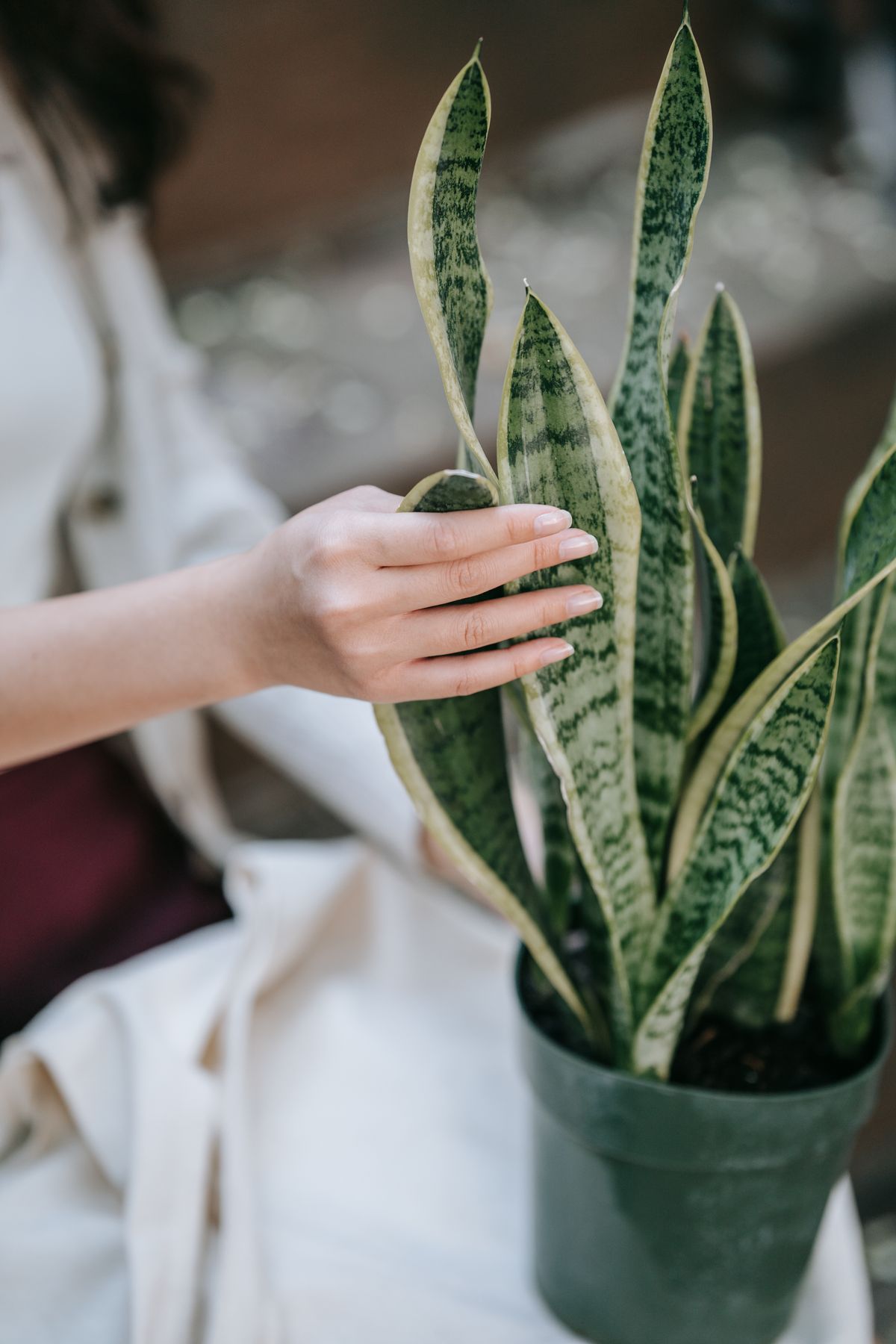
Divide the rhizome rather than taking a leaf cutting. Since a division already includes an intact growing point with its L1 layer attached, the resulting plant carries the same variegation pattern as the parent, not a diluted or partial version of it. This is not a workaround or a special trick — it is simply the one propagation method that does not ask any tissue to do something it structurally cannot do. Leaf cuttings remain a perfectly good method for solid green varieties, where there is no chimeral layer to lose in the first place.
In practice, that means waiting until the plant has at least two distinct leaf clusters connected by enough rhizome to cut cleanly between them, then dividing at that connection rather than removing a single leaf. Expect both the parent and the new division to show new growth within 4-8 weeks in warm, bright conditions — noticeably faster than the 4-8 weeks a leaf cutting needs just to develop its first roots, before a pup even begins forming. If preserving an expensive or hard-to-find variegated cultivar is the goal, division is worth the wait; a leaf cutting is simply the wrong tool for that specific job, not a lesser attempt at the same one.
For the species' complete propagation options and how to choose between them, the Sansevieria Propagation guide and the Sansevieria Trifasciata guide cover the full comparison. The Sansevieria Classification guide covers where Laurentii and other chimeric cultivars fit among the wider species and variety list, and the Sansevieria Plant Botanical Guide covers the full leaf structure this chimeral layer sits within.
If you already have a plain green plant grown from a variegated cutting: there is no fix for that individual plant, but it makes a perfectly healthy solid-green sansevieria on its own. For your next variegated offspring, divide the rhizome instead — that's the one method that was always going to work.
Care FAQ
Why do variegated snake plant cuttings turn green?
Variegated varieties like Laurentii are periclinal chimeras — the yellow color exists only in the outermost cell layer (L1), which forms the leaf's skin. That layer divides in a way that keeps it confined to the surface and never contributes to new internal growth. A leaf cutting regenerates its new plant entirely from inner tissue, which was always plain green, so the resulting pup has no yellow to lose in the first place.
Does this happen to every variegated leaf cutting, or just sometimes?
Essentially every time, for true periclinal chimeras like Laurentii and Bantel's Sensation. This is not inconsistent luck or a sign something went wrong with the cutting — it is a structural certainty based on which cell layer regenerates the new plant. Division is the only propagation method that reliably preserves the color.
Is a green leaf cutting the same thing as a mature plant reverting to green?
No, these are two different processes. A leaf cutting turning green is a one-time structural outcome of propagation method, fixed the moment you take the cutting. A mature, otherwise-variegated plant sending up an all-green shoot from its own rhizome is a separate phenomenon — a new growing point losing its color at the bud level, unrelated to how the plant was originally propagated.
How do you propagate a variegated snake plant and keep the stripes?
Divide the rhizome instead of taking a leaf cutting. A division carries an existing growing point that already includes the L1 layer, so the new plant keeps the same variegation pattern as the parent. This is the only propagation method for chimeral varieties that reliably preserves the color.
Can you fix a snake plant cutting that came up green?
No. Once a cutting has regenerated as solid green, that plant is genetically fixed as green going forward — there is no way to reintroduce the L1 layer to tissue that never had it. The only option is to discard it or keep it as a plain green plant, and propagate future variegated offspring by division instead.
Are all snake plant color patterns chimeras that can be lost this way?
Most of the well-known variegated cultivars are, including Laurentii and Bantel's Sensation. Solid silvery cultivars like Moonshine work differently and are not chimeras in the same sense, though they have their own separate color-stability considerations. Any variety with a distinct edge or stripe pattern different from its leaf body should be assumed chimeral until confirmed otherwise.