
Snake Plant Roots vs Rhizomes: What Is the Difference?
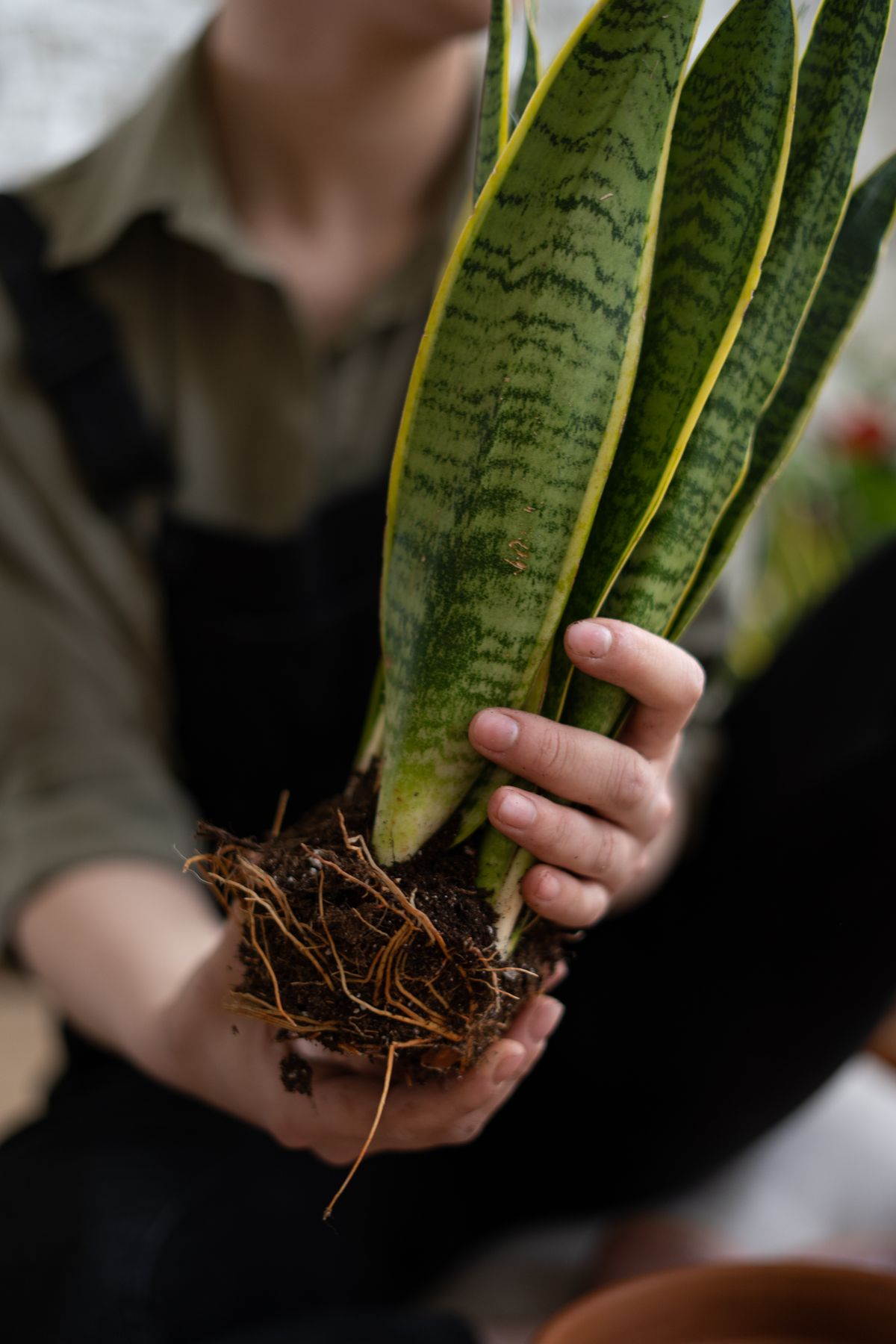
A snake plant rhizome is a thick, pale underground stem that stores water and produces new leaf clusters. A snake plant root is a thinner, wiry, orange-brown structure that grows from the rhizome to anchor the plant and absorb water. The rhizome is a modified stem. The root is a true root. They sit right next to each other underground, which is exactly why they get confused.
Most care guides use "roots" and "rhizome" interchangeably, as though they are two names for the same thing. They are not — and the mix-up is not just semantic. It is the reason people water based on root advice when the actual problem is rhizome rot, or assume a leaf cutting can regrow a whole plant the same way a rhizome division does. (If you already know which one is rotting and just need the fix, the Why Are My Snake Plant Leaves Soft and Mushy? guide covers that directly.)
What Is a Snake Plant Rhizome, Exactly?
The rhizome is the thick, pale, horizontal structure running underground that connects every leaf cluster on the plant. It is not a root — it is a modified stem, and that single fact explains almost everything else about how the plant grows. It stores water and carbohydrates as a reserve the plant draws on during drought or dormancy, sends roots downward from specific points along its length, and produces entirely new leaf clusters upward from growing points spaced out as it spreads.
This is also why sansevieria is often described as "stemless" above ground and why that description is slightly misleading: there is no visible stem, but there is very much a stem — it is just running sideways underground instead of standing upright in the air. The full structural picture of how the rhizome fits into the plant's overall form is in the Sansevieria Morphology guide.
What Are Snake Plant Roots, Then?
Roots are the thinner, wiry structures growing downward from the rhizome, usually a pale orange to light brown color when healthy. Their job is narrower than the rhizome's: anchor the plant in the soil and absorb the water and dissolved minerals the rest of the plant needs. Roots do not store meaningful reserves the way the rhizome does, and they do not produce new leaf clusters — they physically cannot, for a specific structural reason covered below.
Snake plant roots also stay shallow rather than driving deep into the pot, spreading outward from the rhizome instead. This matches the plant's native habitat in arid, rocky parts of West Africa, where useful moisture sits in the upper layer of soil after infrequent rain rather than deep underground.
The Real Difference: Why a Rhizome Is a Stem, Not a Root
Here is the part most care guides skip entirely, and it is the actual answer to "what is the difference." Botanically, the distinction between a stem and a root comes down to nodes. A stem — including a rhizome — has nodes and internodes: points along its length where leaves, roots, or buds attach, with a gap of tissue between each one. NC State Extension's botany chapter puts it plainly: "If you find the presence of buds, leaf scars, or nodes, you have an underground stem, not a root."
A true root has none of that. Instead, every root tip ends in a root cap — a small protective structure that shields the growing tip as it pushes through soil, and also senses gravity to steer the root downward. Root caps are absent from true stems entirely; their presence is one of the clearest ways to confirm you are looking at a root and not a stem, rhizome included. So when you see a snake plant's rhizome producing a new bud that becomes a leaf cluster, that is a stem doing exactly what stems do. Roots never do this, because they were never built with the buds to do it in the first place.
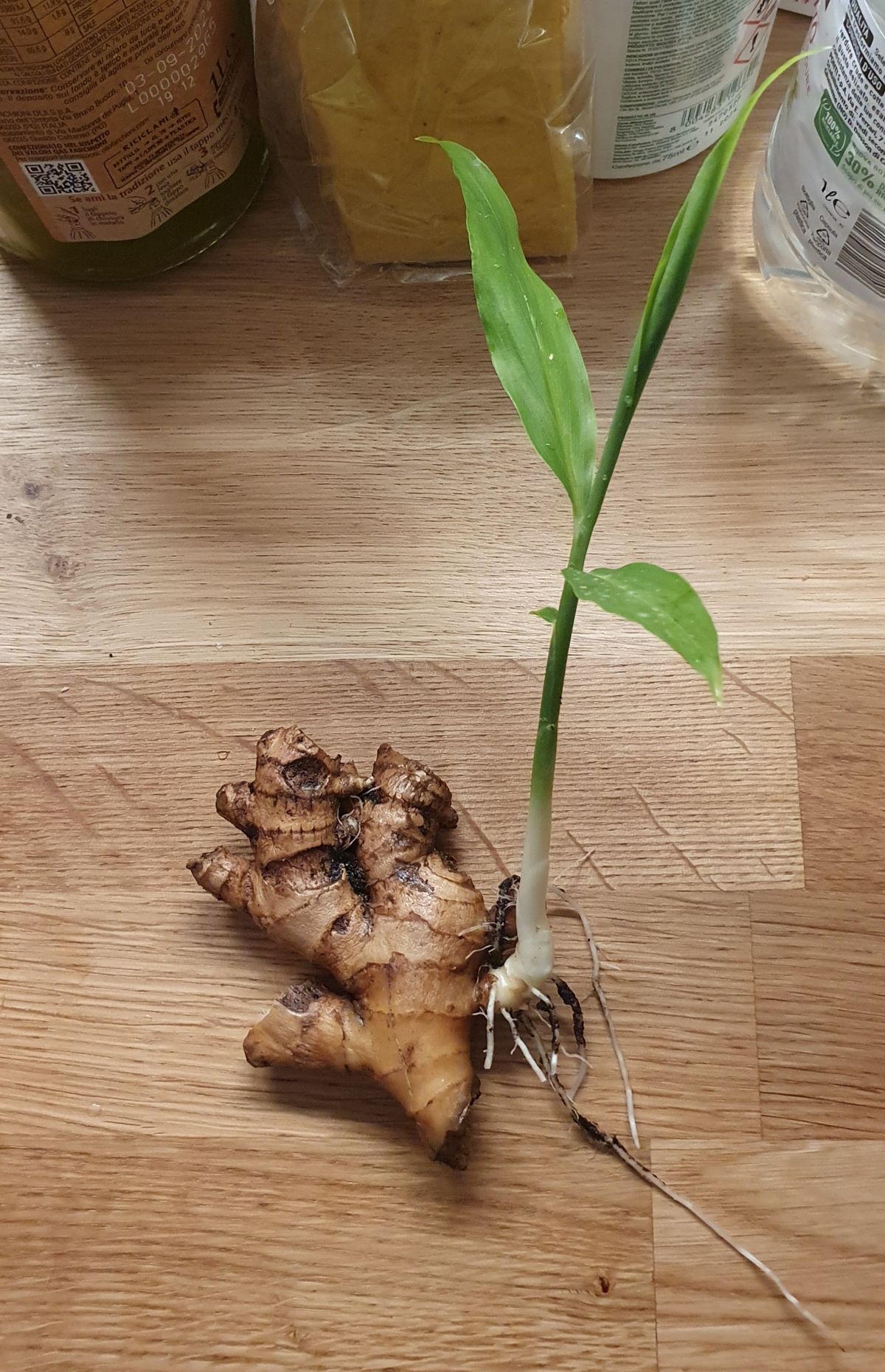
Ginger is a rhizome most people have actually handled in a kitchen, and it makes the point well: the small growth buds you sometimes see sprouting from a piece of ginger are the same kind of structure as the growing points on a snake plant's rhizome. You would never expect a carrot root to sprout a new shoot from its side the way ginger does. That difference is not a quirk of ginger specifically — it is the general rule that separates every rhizome from every root.
There is a second layer to this that almost no care guide mentions: roots and stems even branch differently on a cellular level. A root grows new lateral roots from tissue deep inside itself — a layer called the pericycle — so the new root has to push outward through the existing root's own skin to emerge. A stem, rhizome included, does the opposite: new growth buds form at or near the surface and simply extend outward from there. That is why you will never find a snake plant root breaking through the side of another root, but you will regularly find a new growing point breaking the surface of the rhizome. The two structures are not just shaped differently. They build new tissue in opposite directions.
How to Tell Them Apart When You Actually Repot
In practice, telling the two apart takes about five seconds once you know what you are looking at. The rhizome is noticeably thicker, pale — almost white when rinsed clean of soil — and firm in a way that feels more like a swollen stem than a root. The roots attached to it are visibly thinner, wirier, and a consistent orange-to-brown color, branching outward rather than running in one continuous horizontal line.
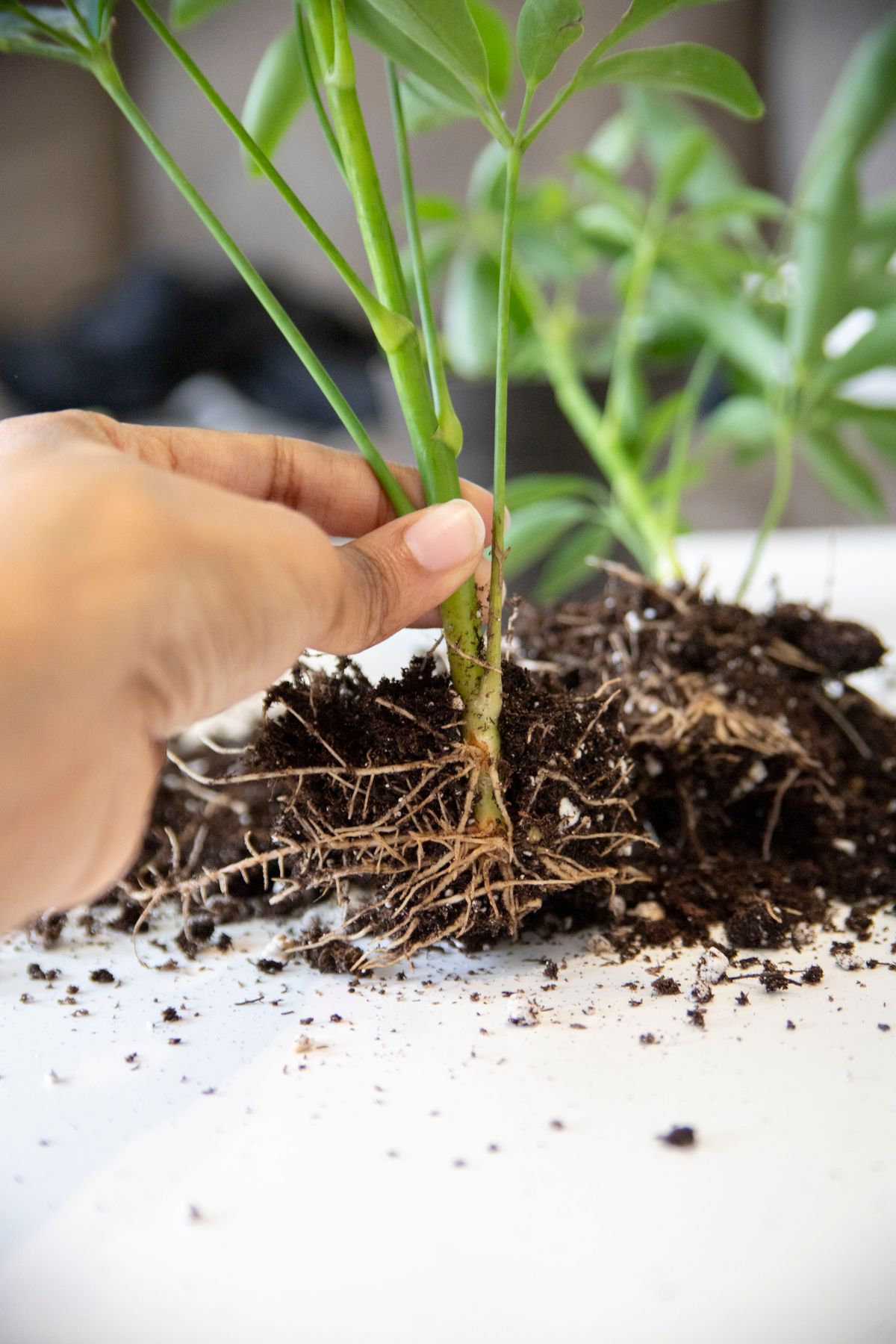
Color is a genuinely useful health check for both, though it means different things for each. A pale orange root is a healthy root. A dark brown, gray, or black root that has gone soft is a rotted one. The rhizome follows the same logic at a different baseline — healthy rhizome tissue is firm and pale orange-white when cut, and soft, dark, or mushy tissue anywhere along it signals rot that needs to be cut back to firm tissue, the same standard covered in the Rhizome Division guide for anyone dividing a plant.
Why This Distinction Actually Matters
This is not botanical trivia for its own sake. Which structure you are looking at changes what a given piece of damage actually means. Sever a root, and the plant barely notices — it has many others doing the same job, and a damaged root is routinely replaced without any visible effect on the leaves above. Sever the rhizome at the wrong point, and you can cut a leaf cluster off from the plant's entire water and carbohydrate reserve, along with its only connection to a growing point.
That is also why a leaf cutting takes so much longer to become a full plant than a rhizome division does. A cutting has no rhizome tissue at all to start with — it has to slowly generate new root and rhizome tissue of its own from scratch over 4-8 weeks, with no reserves to draw on in the meantime. A rhizome division skips that entire waiting period because it already comes with a working rhizome section attached. The full biology of why that shortcut works is in the Rhizome Division guide.
It also changes how much you should worry about accidental damage while repotting. Snap a root while loosening a root-bound plant from its pot, and nothing changes for the leaves above — the plant has other roots doing the same job and grows replacements without missing a beat. Snap the rhizome itself between two leaf clusters, and you have effectively performed an unplanned division: both resulting pieces need the same callusing treatment a deliberate cut would get, or the exposed rhizome tissue is left open to rot in damp soil. Knowing which structure you just damaged tells you whether to shrug it off or intervene.
Do New Leaves Come From the Roots or the Rhizome?
Always the rhizome, never the roots. Every new leaf cluster originates from a growing point on the rhizome — technically the apical meristem, the same tissue responsible for essentially all new growth the plant produces, including flower stalks when the plant blooms. Roots contribute nothing to leaf production; their entire job stops at anchoring and absorption. If a snake plant has stopped producing new leaves, the cause always traces back to something happening at the rhizome's growing point, not the roots underneath it — the Why Is My Snake Plant Not Growing New Leaves? guide covers the specific reasons that growing point can stall. When a dormant growing point activates on its own rather than stalling, the result is a new pup — the How Do Snake Plant Pups Form Underground? guide covers that process in full.
Is a Root-Bound Plant a Root Problem or a Rhizome Problem?
Neither, really — and this is worth saying clearly because plenty of guides frame a tightly packed pot as an emergency. What you are usually seeing when a plant is root-bound is the rhizome, not the roots, pressing against the pot walls or cracking a plastic container as it expands laterally looking for more room to spread. Snake plants tolerate this well and often do better slightly root-bound than freshly repotted into a pot with too much spare soil.
A colleague once kept a snake plant on his desk across three different offices for eleven years. It was repotted exactly once, when the rhizome finally cracked the plastic pot it had outgrown. It is still alive. That kind of tolerance for being left alone comes directly from the rhizome's reserves, not from any special resilience in the roots. Repot only every 2-3 years, and only once roots or rhizome are visibly escaping the drainage holes or deforming the pot — the Sansevieria Morphology guide covers why this architecture makes root-bound conditions low-risk for this particular plant.
For the species' complete biology and how the root and rhizome system fits into everything else it does, the Sansevieria Plant Botanical Guide and the Sansevieria Trifasciata guide cover it in full.
Next time you repot: brush the soil away and look for the pale, thick horizontal structure connecting the leaf clusters. That is the rhizome. Everything thinner and wirier growing down from it is a root. Two structures, two jobs, one plant.
Care FAQ
What is the difference between snake plant roots and rhizomes?
The rhizome is a thick, pale, horizontal underground stem that stores water and carbohydrates and produces new leaf clusters from its growing points. Roots are the thinner, wiry, orange-brown structures that grow downward from the rhizome to anchor the plant and absorb water and minerals. One is a modified stem. The other is a true root. They look similar at a glance but serve completely different functions.
Do snake plant roots turn into rhizomes?
No. Roots and rhizomes are separate structures from the start and one never converts into the other. A root can only ever function as a root. New rhizome tissue comes from the rhizome's own growing points and axillary buds extending outward, not from a root changing what it is.
Can you propagate a snake plant from just a root?
No. A root fragment with no attached rhizome tissue cannot grow a new leaf cluster, because roots have no buds capable of producing shoots. Propagation requires either a section of rhizome (division) or a leaf cutting, which slowly forms its own new root and rhizome tissue over 4-8 weeks. A bare root alone has no growing point to work from.
Why are my snake plant roots orange?
A pale orange to light brown color is normal and is actually a good sign — it usually means the roots are healthy and actively functioning. Roots that have turned dark brown, gray, or black, and feel soft or mushy rather than firm, indicate rot rather than normal coloring.
Is it bad if I accidentally cut through a rhizome while repotting?
It depends on where the cut lands. A cut through open rhizome tissue between leaf clusters heals over in the same way a deliberate division cut does, as long as you let it callus in dry air for 24-48 hours before it sits in moist soil. A cut that removes a leaf cluster's only connection to the rhizome is more serious, since that cluster loses its access to the plant's stored water and nutrient reserves.
Do snake plant rhizomes need to be exposed above the soil?
No. Unlike some rhizomatous plants such as bearded iris, snake plant rhizomes grow perfectly well fully buried, sitting just below the surface. There is no need to deliberately expose them for the plant's health — they only become visible naturally when the plant has outgrown its pot and starts pushing against the soil surface or the container walls.