
Sansevieria Plant Botanical Guide: Taxonomy & Leaf Science
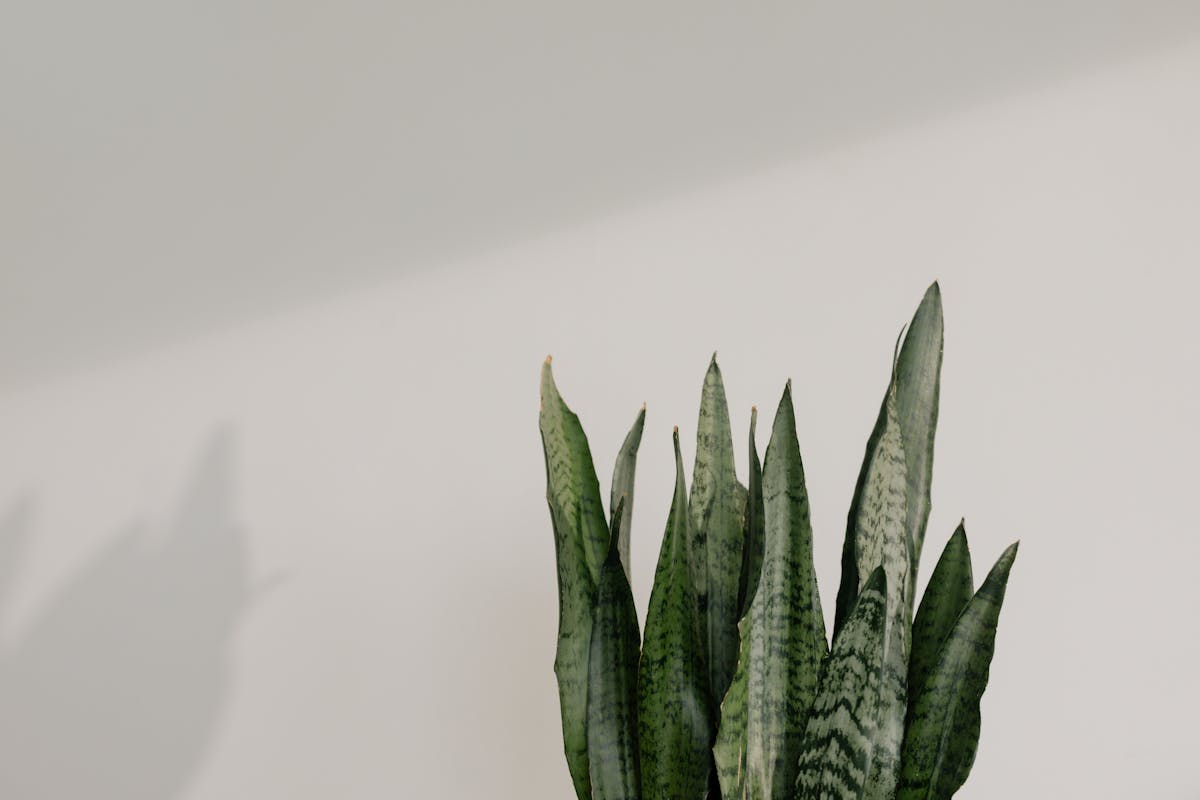
Sansevieria (Dracaena trifasciata) is a monocotyledonous flowering plant in the family Asparagaceae. Its tough, sword-shaped leaves contain a thick waxy cuticle and water-storage tissue beneath the surface. Underground, it grows from horizontal rhizomes. It opens its stomata at night — a water-conservation strategy called CAM photosynthesis. All of this explains why it tolerates the conditions most houseplants cannot.
Most articles will tell you sansevieria "likes well-draining soil" and "tolerates low light." Both are true. What they rarely tell you is why — what the plant is actually made of, and how its structure determines its behaviour. The botany here is not academic decoration. It is the explanation behind every care guideline you have ever read about this plant.
What Kind of Plant Is Sansevieria, Exactly?
Sansevieria is an angiosperm — a flowering plant — and a monocot. These two facts place it firmly within a large and biologically coherent group of plants that includes grasses, palms, lilies, agaves, and asparagus.
Monocots germinate with a single seed leaf (cotyledon). Their leaves have parallel venation — veins running lengthwise rather than branching in a network. Their vascular bundles are scattered throughout the stem tissue rather than arranged in a ring, which is why these plants do not build a woody trunk the way oak trees do. Flower parts typically come in multiples of three.
If you run your finger along a snake plant leaf, you can feel the parallel ridges. That is monocot venation made visible. It is not decorative; it is the vascular structure that carries water and nutrients from root to leaf tip.
Within the monocots, sansevieria belongs to the order Asparagales and the family Asparagaceae — the same family as common asparagus, agave, hyacinth, and hosta. These plants share a common ancestry, broadly similar floral biology, and a tendency toward drought tolerance that is more pronounced in some lineages than others.
Sansevieria Taxonomy: From Sansevieria to Dracaena
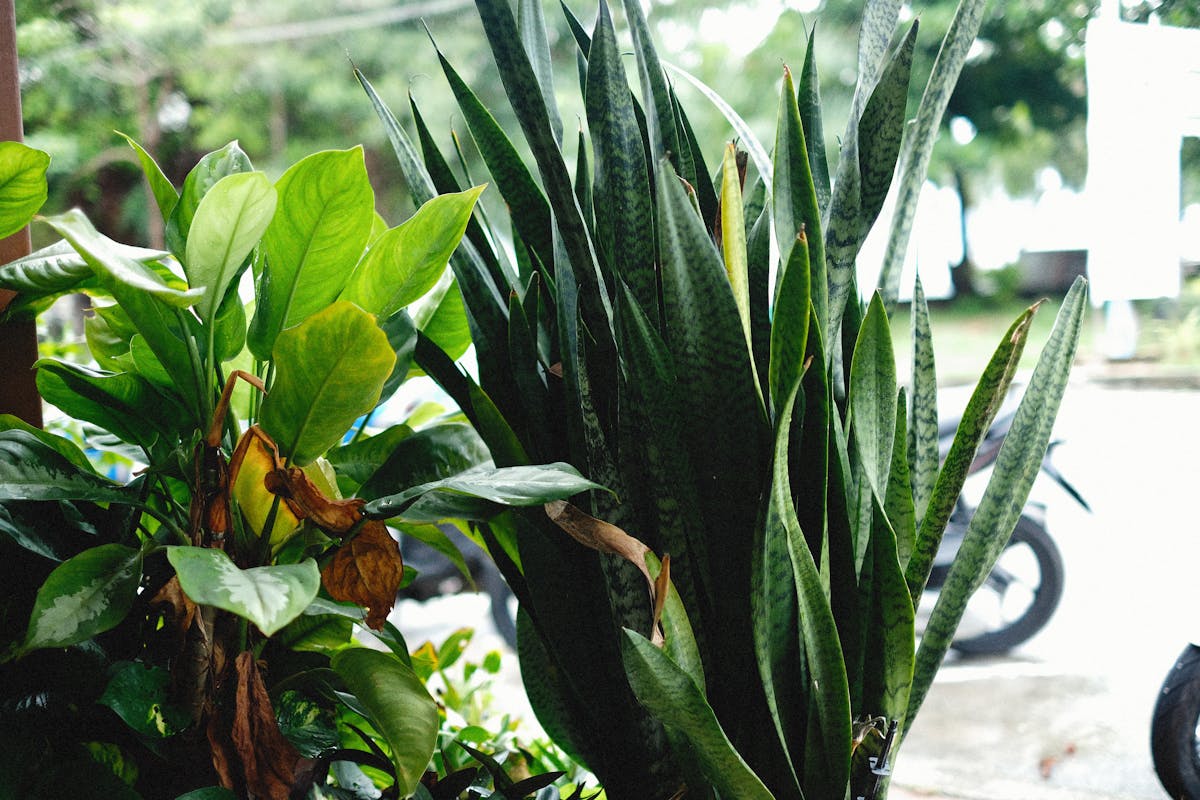
For most of botanical history — from 1903 until 2017 — the snake plant sat in its own genus, Sansevieria, alongside roughly 70 related species. In 2017, DNA sequencing showed that Sansevieria had evolved from within Dracaena rather than alongside it, making the two-genus split taxonomically invalid. The reclassification was formalised in Mabberley's Plant-book: the accepted name for the common snake plant is now Dracaena trifasciata, with Sansevieria trifasciata surviving as a synonym — correct in casual use, superseded in botanical taxonomy.
The plant itself did not change. Its care requirements, toxicity, leaf structure, and growing behaviour are identical. Only the name changed — and most nurseries are still catching up.
The full breakdown of classification ranks from kingdom to species is in the Sansevieria Classification guide.
Where Snake Plant Comes From: Native Habitat
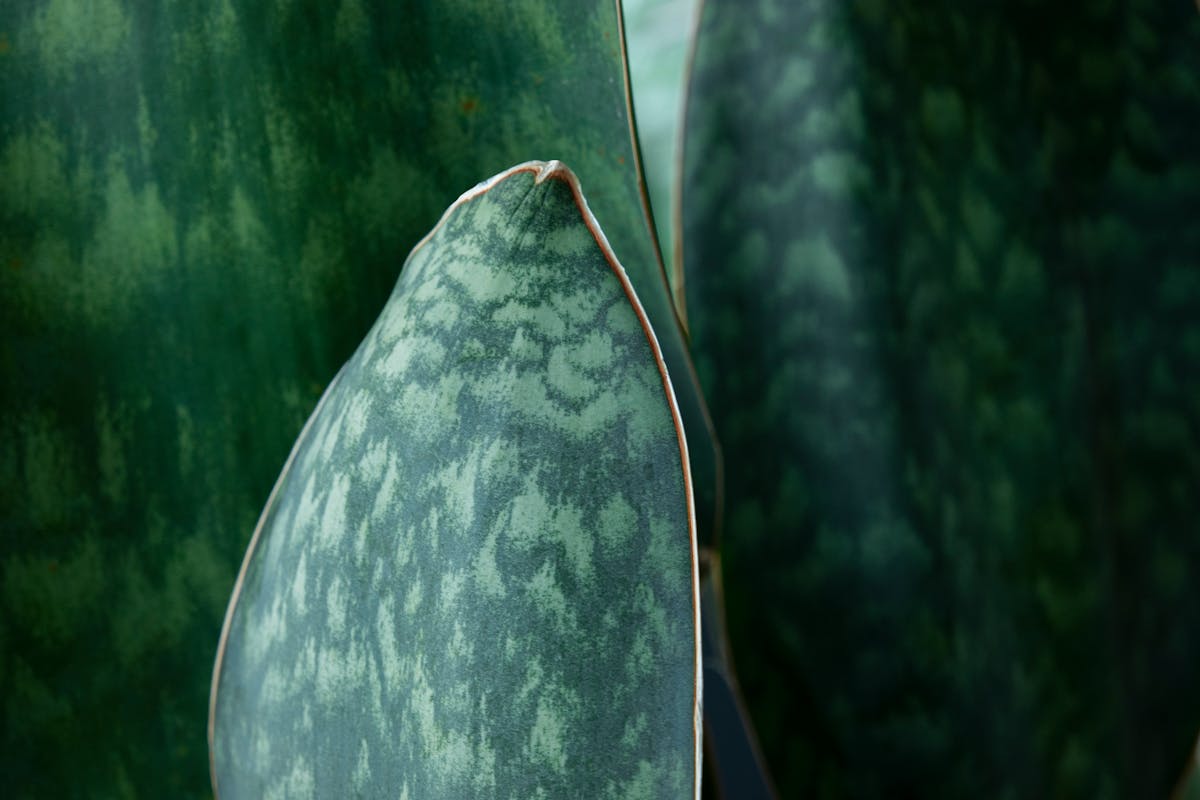
Dracaena trifasciata is native to West and West-Central Africa — Nigeria, Cameroon, Congo, Gabon, and neighbouring countries. Other species in the broader group extend across sub-Saharan Africa, with some into southern Asia.
The habitat matters for understanding the plant's biology. This is not a rainforest plant. In its native range, D. trifasciata grows in rocky, well-drained ground where dry seasons are real. Tropical savanna vegetation, rocky slopes, and hillside outcrops — soils that drain fast, dry out between rains, and do not hold moisture at the root for extended periods.
That ecological niche is why the plant developed every structural feature discussed in this guide. Thick leaves to store water. CAM photosynthesis to conserve it. Deep rhizomes to survive drought underground. The plant is not "easy" to care for by luck. It is easy to care for because it evolved in conditions that selected for toughness and storage over rapid, soft growth.
The practical implication is straightforward: recreating "fast-draining soil that dries between waterings" indoors is not a quirky preference — it is literally the soil the plant evolved in. The full picture — the wet/dry seasonal cycle, soil type, and range across the wider genus — is in the Sansevieria Habitat guide.

Leaf Structure: What Those Leaves Are Actually Made Of
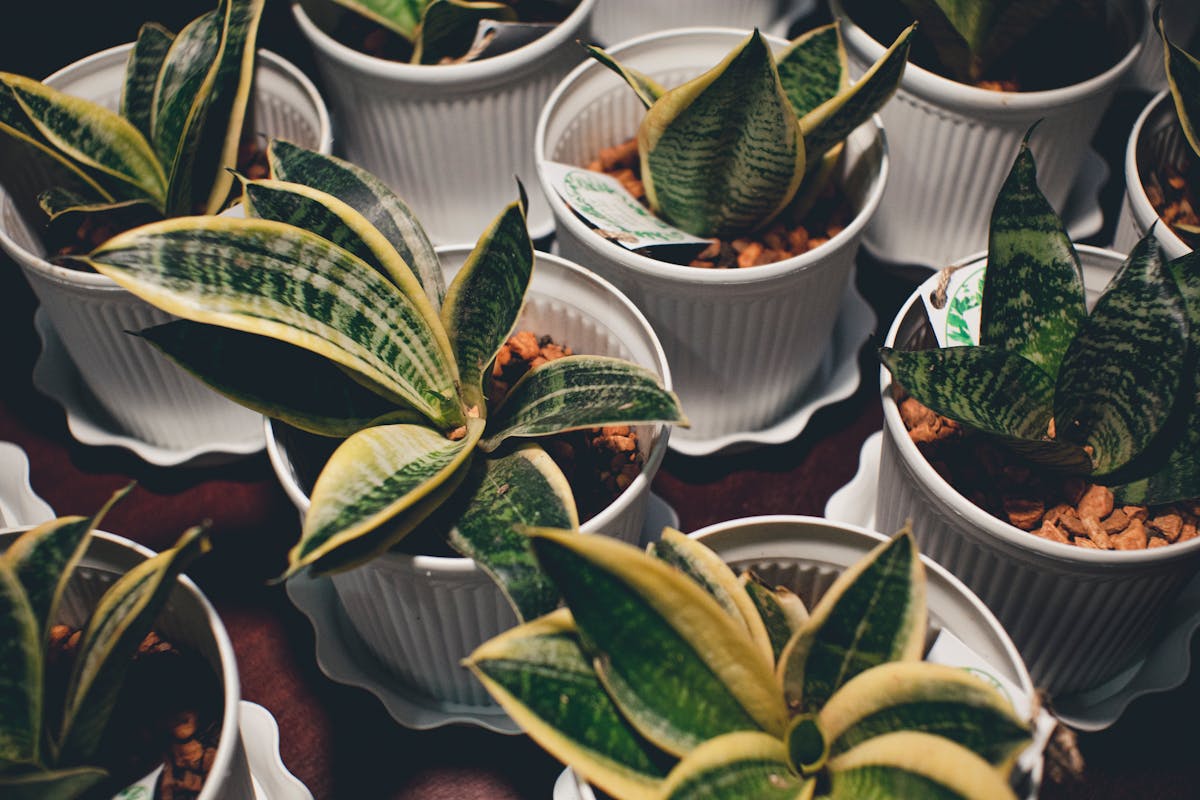
Sansevieria leaf morphology comes in two main forms across the genus: linear-lanceolate (flat, sword-shaped — the classic D. trifasciata form) and cylindrical (round in cross-section, as in D. angolensis, reducing the surface area exposed to dry air even further). Both are xeromorphic — structurally built for dry conditions — through the same three features: a thick waxy cuticle blocking water loss, hypodermal water-storage tissue acting as an internal reservoir, and dense structural fibres (the same fibres historically used for rope and bowstrings, the source of the name "African bowstring hemp").
Together, the cuticle and water-storage tissue explain why snake plant leaves feel leathery and firm rather than soft and fleshy — a different structure from a succulent like aloe, but achieving similar drought tolerance through a parallel set of adaptations. The full anatomical breakdown — cuticle, water-storage cells, fibre structure, and how they vary across hard- and soft-leaved species — is in the Sansevieria Morphology guide.
Underground Architecture: Rhizomes and What They Mean
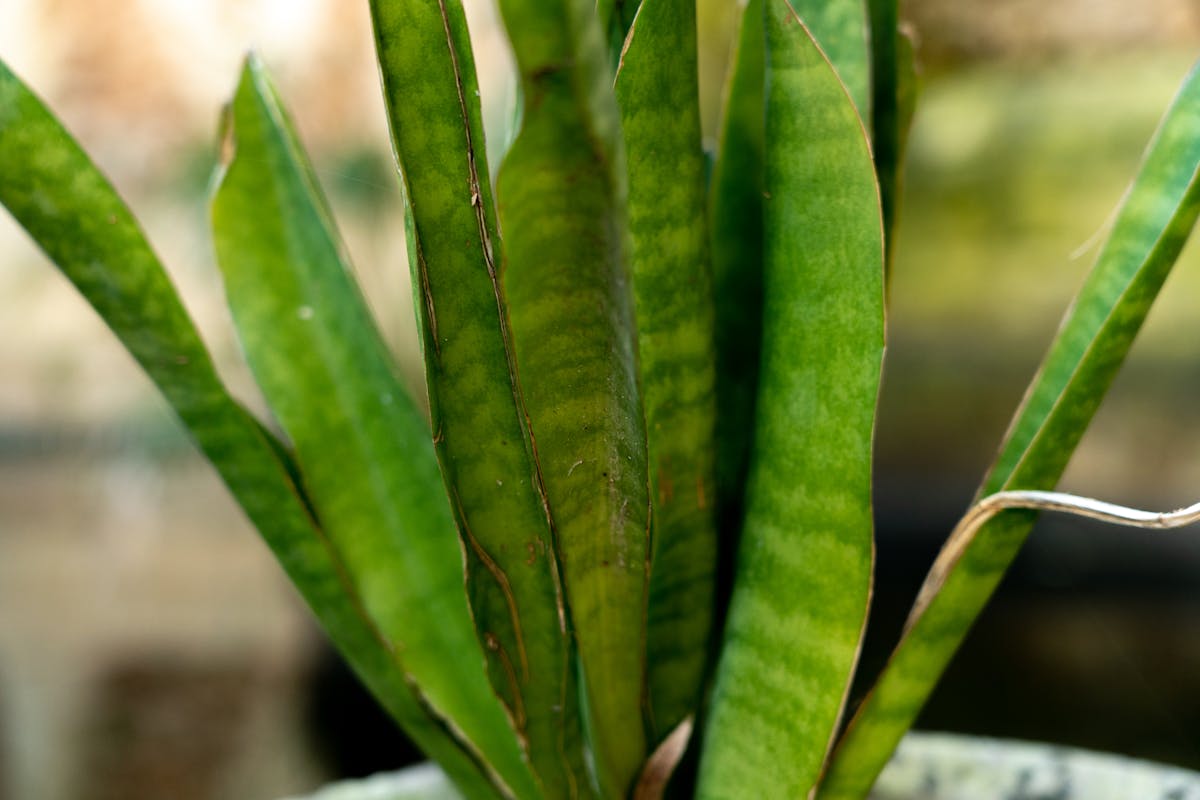
What you see above ground is leaves. What runs the show underground is a rhizome — a horizontal, storage-rich stem that creeps through the soil, producing new leaf shoots and adventitious roots at intervals. This architecture is why the plant survives years of neglect (the rhizome holds reserves and waits out bad conditions) and why division — splitting the rhizome into independently rooted modules — is the fastest, most reliable propagation method.
The full rhizome and root anatomy is covered in the Sansevieria Morphology guide, and the division process step-by-step is in the Rhizome Division guide.
CAM Photosynthesis: The Night-Time Trick
Most plants open their stomata during the day, which means every breath of CO₂ absorbed also costs water vapour lost through the same open pores. Sansevieria avoids this using Crassulacean Acid Metabolism (CAM): stomata open only at night, when it is cooler and less dry, storing the absorbed CO₂ as malic acid; during the day, stomata stay shut while that stored acid fuels photosynthesis. The result is a plant that fixes carbon while using a fraction of the water a standard houseplant needs — and the reason it releases a small amount of oxygen at night rather than during the day, a property the NASA 1989 Clean Air Study documented (though its real-world impact in a ventilated home is modest).
The practical care implication: CAM evolved around a seasonal wet–dry rhythm, so permanent moisture at the root is fundamentally incompatible with how this plant processes water and carbon — not just a rot risk. The full night/day cycle, the CAM-idling survival mode, and what the biology means for watering is covered in the CAM Photosynthesis guide. For what happens when the soil stays too wet for too long, the overwatering guide covers the signs and recovery steps in detail.
Flowering: Rare Indoors, Worth Understanding
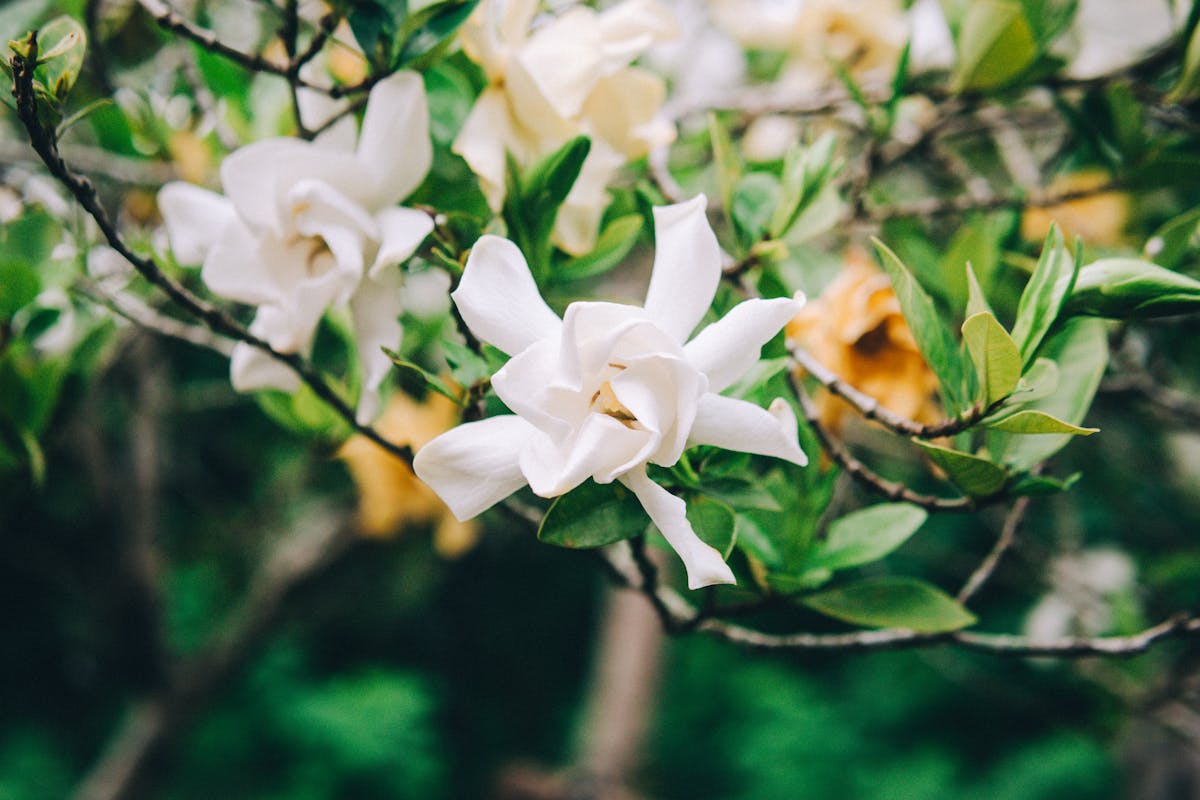
Sansevieria flowers infrequently in cultivation. A healthy, mature plant may produce a tall inflorescence — a vertical spike carrying small, pale, fragrant flowers. The flowers are typically cream or white, with a strong sweet scent that is most noticeable at night.
This is not coincidence. In its native habitat, the flowers are pollinated by moths and other night-flying insects. Pale colouring (visible in low light), strong fragrance (detectable over distance in dark conditions), and nighttime opening are all traits selected by nocturnal pollinators. The plant evolved its flower timing to match its pollinators, just as it evolved its stomatal timing to match the dry season.
After pollination, the plant develops small, orange-toned berries. This sexual reproduction is genuinely secondary for this species — vegetative spread via rhizomes is the plant's dominant reproductive strategy in the wild, and in cultivation flowering is unpredictable enough that I would not advise trying to trigger it deliberately.
If your plant flowers, enjoy it. The fragrance is genuinely good. If it never does, that is completely normal — it is not a sign of poor care. Flowering in cultivation is unpredictable enough that a plant can go a decade without blooming, flower once, and never repeat it. The full flowering and reproductive biology is covered in the Sansevieria Morphology guide.
What the Biology Tells You About Care
The botany maps directly onto a handful of specific care principles:
Water less than you think. CAM photosynthesis and hypodermal water storage are drought-survival mechanisms, not drought-tolerance as a pleasant bonus. The plant is designed for wet–dry cycles. Water every 2–6 weeks in spring and summer; every 4–8 weeks in winter. Every overwatering problem starts by ignoring this.
Drainage matters for biological reasons. The native habitat is rocky, fast-draining substrate. Roots need gas exchange — oxygen access — between waterings. Soil that stays wet blocks this and kills roots. A cactus mix or a 1:1 mix of potting soil and perlite recreates the substrate conditions the plant evolved in.
Root-bound is fine. The rhizome system is designed for a contained, spreading architecture. Unlike many plants that become stressed when roots fill the pot, snake plant tolerates — and often prefers — being slightly root-bound. Repot every 2–3 years, only when roots are visibly escaping the drainage holes. For a full species reference and taxonomy breakdown, the Encyclopaedia Britannica Sansevieria entry remains a reliable summary of the genus.
Light affects metabolism, not just growth rate. In low light (below 800 lux), CAM metabolism slows. The plant draws on stored leaf reserves rather than fresh photosynthesis. It survives, but growth slows dramatically — roughly one inch per year in a north-facing room. If yours has not grown in twelve months, that is probably the cause. Bright indirect light at 2,000–4,000 lux is where this plant actually works well.
Sansevieria is a plant worth understanding on its own terms — a monocot from African savannas whose leaf structure, underground architecture, and unusual photosynthesis pathway all exist for specific ecological reasons. The care rules follow directly from the biology. Check the soil before you water next: push your finger two inches in, and if there is any moisture at all, close the watering can and come back in a week.
Care FAQ
What type of plant is a sansevieria?
Sansevieria is a monocotyledonous flowering plant (angiosperm) in the family Asparagaceae, order Asparagales. It is classified as a xerophyte — a plant structurally adapted to dry conditions — with CAM photosynthesis, a thick waxy cuticle, and water-storing leaf tissue that allow it to tolerate drought.
What is the leaf structure of a snake plant?
Snake plant leaves are linear-lanceolate (flat, sword-shaped) in most species, or cylindrical in species like Dracaena angolensis. All forms share a thick waxy cuticle to reduce water loss, hypodermal water-storage tissue beneath the surface, and parallel venation typical of monocots.
Does sansevieria use CAM photosynthesis?
Yes. Sansevieria (Dracaena trifasciata) uses Crassulacean Acid Metabolism (CAM), opening its stomata at night rather than during the day. This reduces water loss by avoiding gas exchange during hot, dry daytime hours, making it unusually water-efficient among common houseplants.
What is the underground structure of a snake plant?
Snake plants grow from horizontal underground rhizomes — storage stems that spread and produce new shoots and adventitious roots. This rhizomatous architecture is what allows the plant to propagate by division and to survive unfavorable conditions by drawing on stored energy below ground.
Why was sansevieria reclassified as dracaena?
DNA sequencing showed that Sansevieria was genetically nested inside the Dracaena genus, making a separate Sansevieria genus taxonomically invalid (paraphyletic). In 2017, all species were merged into Dracaena. The plant itself is unchanged — only the accepted name changed.
Does sansevieria release oxygen at night?
Yes. Because it uses CAM photosynthesis and opens its stomata at night, sansevieria absorbs CO₂ and releases oxygen during nighttime hours — the opposite of most houseplants. This is why it is commonly recommended as a bedroom plant, though the effect on air quality in a ventilated room is modest.
What were sansevieria leaf fibres used for historically?
The strong, water-resistant fibres in sansevieria leaves were traditionally used to make ropes, bowstrings, and textiles — particularly in parts of Africa. This is the origin of its common name African bowstring hemp. The fibre properties come from the same thick-walled leaf cells that give the leaves their stiffness.