
Sansevieria Classification: Snake Plant Taxonomy Explained
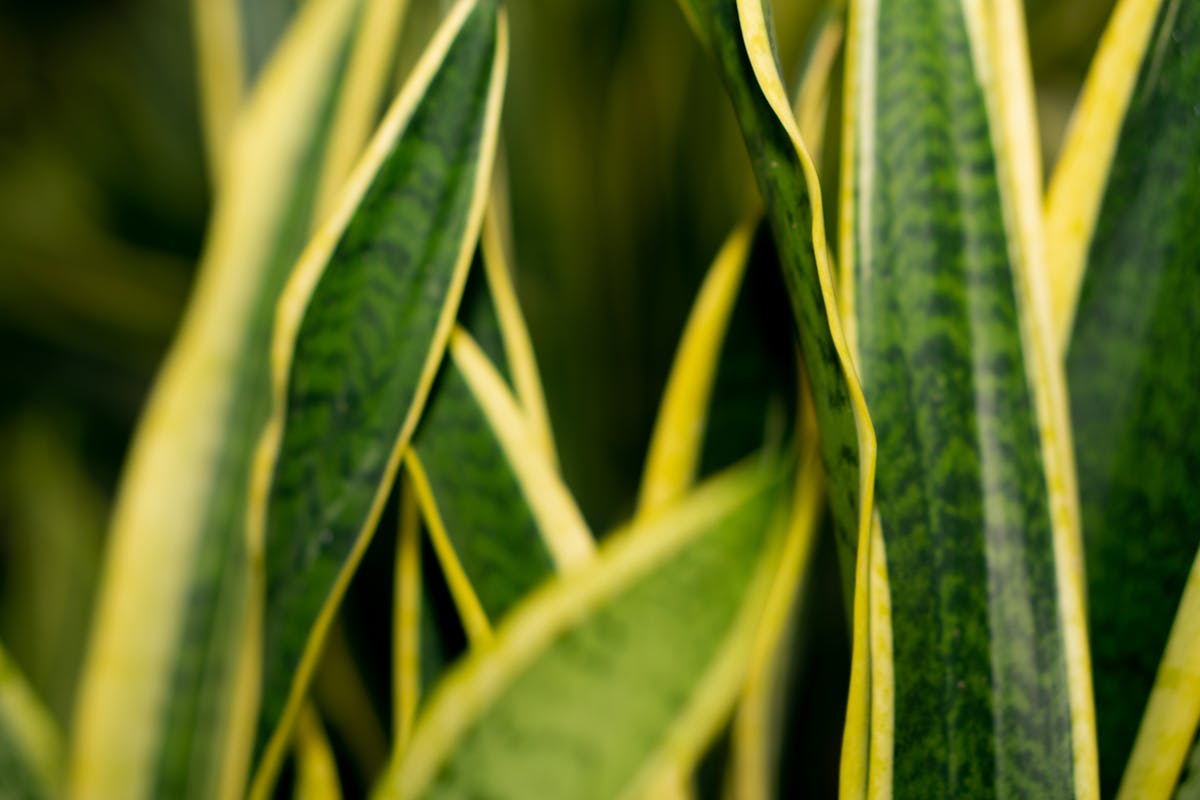
Sansevieria classification places the snake plant in kingdom Plantae, family Asparagaceae, and — following a landmark 2017 DNA study — genus Dracaena rather than the old Sansevieria. Its current accepted scientific name is Dracaena trifasciata. The former name Sansevieria trifasciata is now a synonym. Nothing about the plant changed. Only the name on the label did.
Most plant owners encounter this for the first time when they search for their snake plant at a nursery and find it listed under a name they do not recognise. The taxonomy shift was not cosmetic — it was the result of molecular biology upending two centuries of visual-based naming. Here is what the full classification actually looks like, why botanists made the change, and what it tells you about the plant in your living room.
What Is Sansevieria Classification?
Like all living things, the snake plant is placed into a nested hierarchy of groups — from the broadest category (kingdom) down to the most specific (species) — based on shared evolutionary history. The system is called taxonomy, and it has been revised continuously since Carl Linnaeus formalised it in the 18th century.
The short answer to "what is the classification of snake plant" is this:
| Rank | Name | Notes |
|---|---|---|
| Kingdom | Plantae | Plant kingdom |
| Phylum | Tracheophyta | Vascular plants |
| Class | Liliopsida | Monocots |
| Order | Asparagales | Order Asparagales |
| Family | Asparagaceae | Asparagus family |
| Genus | Dracaena | Formerly Sansevieria |
| Species | Dracaena trifasciata | Formerly Sansevieria trifasciata |
The classification tells you far more than a name. Each rank places the plant within a larger context of related organisms — and at every level, there is something worth knowing.
How Are Plants Classified Scientifically?
Plant taxonomy uses a hierarchical ranking system where each level groups organisms that share common ancestry. The seven main levels run from broadest to most specific: Kingdom → Phylum → Class → Order → Family → Genus → Species.
Each organism gets a two-part Latin name under a convention called binomial nomenclature — developed by Linnaeus in 1753. The first part is the genus (capitalised, italicised). The second is the species epithet (lowercase, italicised). Together, they form an unambiguous scientific label understood by botanists worldwide, regardless of which common name — snake plant, mother-in-law's tongue, or African bowstring hemp — is used locally.
Snake plant's history with this system is longer than most houseplants realise. Linnaeus himself first grouped it with Aloe in 1753. In 1903, botanist David Prain placed it in Sansevieria based on its physical features. In 2017, genome sequencing data published with the support of the Royal Botanic Gardens, Kew moved it into Dracaena. Three different names in just over two and a half centuries — all for the same plant.
What Family Does Snake Plant Belong To?
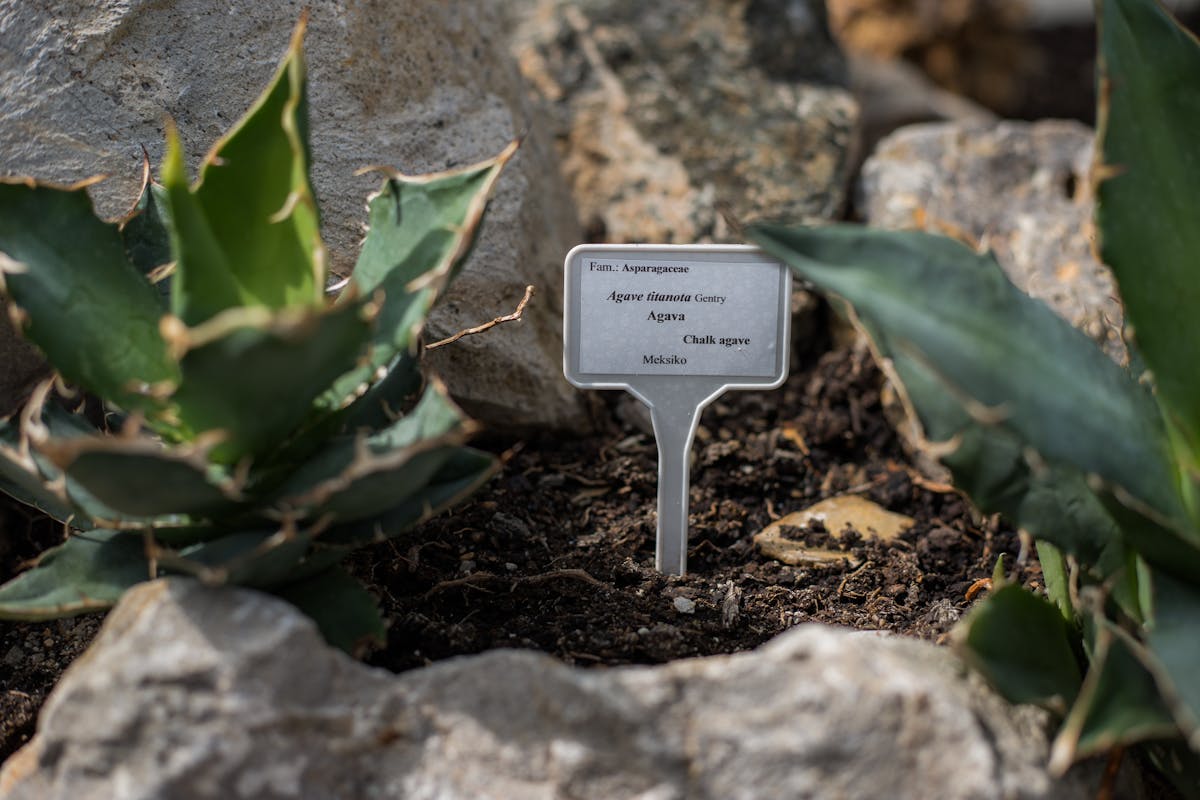
Snake plant belongs to the Asparagaceae family — a large and biologically diverse family of flowering plants within the order Asparagales. Asparagaceae contains over 2,900 species across 114 genera, which is one of the reasons it surprises people. Common garden asparagus, hostas, agaves, hyacinths, and the snake plant all share the same family.
What unites plants in Asparagaceae is a set of structural traits: mostly underground storage structures, parallel leaf venation (the characteristic monocot pattern of veins running lengthwise along leaves rather than in a branching network), and specific arrangements of floral parts — typically in multiples of three.
This is not an obscure botanical footnote. The family membership is what tells botanists — and increasingly, gardeners — that sansevieria has more in common with an agave than it does with a true lily. That matters practically, because Asparagales plants share broadly similar soil drainage requirements, drought tolerance mechanisms, and leaf water-storage adaptations. When your care guide says "treat it like a succulent," the plant's family classification is one reason that advice is accurate.

The Sansevieria to Dracaena Reclassification
The most significant event in modern snake plant taxonomy happened in 2017. For over two centuries, snake plants sat in their own genus: Sansevieria. That changed when a series of phylogenetic studies, using DNA sequencing of specific gene regions — including the plastid genes matK and rbcL — showed something unexpected.
Sansevieria was not a distinct evolutionary lineage. Genetically, it was nested inside the Dracaena genus. Keeping Sansevieria as a separate genus made Dracaena paraphyletic — a taxonomic term for a grouping that does not include all descendants of a common ancestor. That violates one of the core principles of modern classification: every valid genus must represent a true, monophyletic evolutionary group.
The solution was to merge the two genera under the older priority name: Dracaena. The official reclassification was published in Mabberley's Plant-book, authored by David John Mabberley, a keeper of the Herbarium at Royal Botanic Gardens, Kew.
The Encyclopaedia Britannica entry for Sansevieria summarises the shift clearly: formerly a genus of about 70 species, now placed entirely within Dracaena based on phylogenetic data.
What actually changed? Botanically: the genus name. Practically: nothing. The plant is biologically identical. Its leaf structure, water storage, CAM photosynthesis, care requirements, and toxicity profile are unchanged. Every care guide written under the name Sansevieria trifasciata applies fully to Dracaena trifasciata. The name on the label changed; the plant in the pot did not.
(Most nurseries are still catching up. Finding "Sansevieria trifasciata" on a plant tag in 2026 is perfectly normal — it just means the grower hasn't updated their labels yet.)
Scientific Naming: What Dracaena trifasciata Actually Means
The name Dracaena trifasciata is not arbitrary Latin. Both parts encode specific information about the plant.
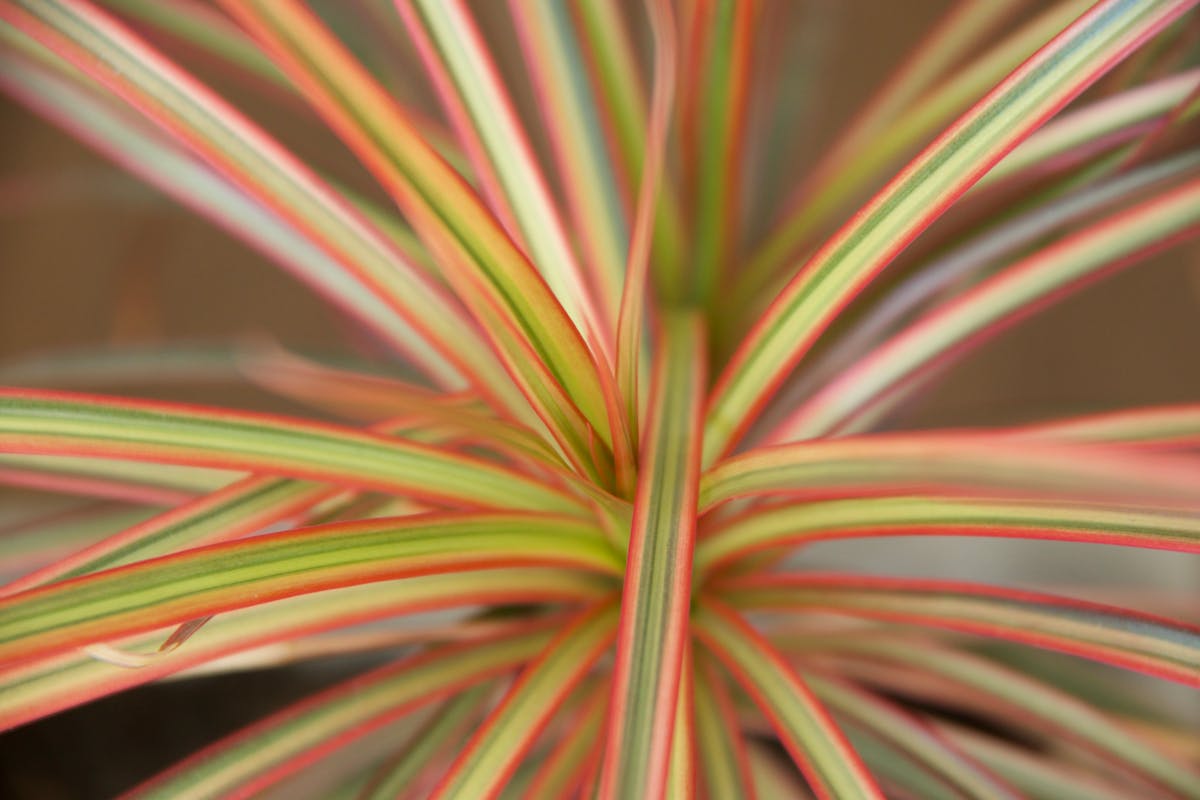
Dracaena comes from the Greek word for "female dragon" — a reference to the red resin found in the sap of some relatives in the genus, historically compared to dragon's blood. trifasciata is Latin meaning "three-banded," describing the horizontal cross-banding visible on the leaves.
This is binomial nomenclature working exactly as designed: each name is a compact, two-part description of something observable about the organism. Under the Plants of the World Online database at Kew Science, Dracaena trifasciata is the accepted name, with Sansevieria trifasciata listed as a homotypic synonym — correct but superseded.
Scientific names are always written in italics, genus capitalised, species in lowercase. When a species has been previously placed in a different genus, the original author's name sometimes appears in parentheses after the species epithet — a notation that signals the name's history without erasing it.
Types of Snake Plants: The Main Species and Cultivars
The genus Dracaena (formerly Sansevieria) contains over 70 known species, primarily native to Africa and southern Asia, plus dozens of cultivars selected for leaf colour and growth habit — Laurentii's yellow margins, Hahnii's compact rosette, cylindrical D. angolensis, and more. Note that margin and stripe variegation in cultivars like Laurentii is chimeric — it exists only in the outer cell layer, so leaf cuttings revert to plain green while division preserves it. (The Why Do Variegated Snake Plant Cuttings Turn Green? guide covers the full cell-layer mechanism behind this.)
The full species and cultivar breakdown, with identifying features and care differences, is in the Types of Sansevieria guide.
Monocots: What the Plant's Class Tells You
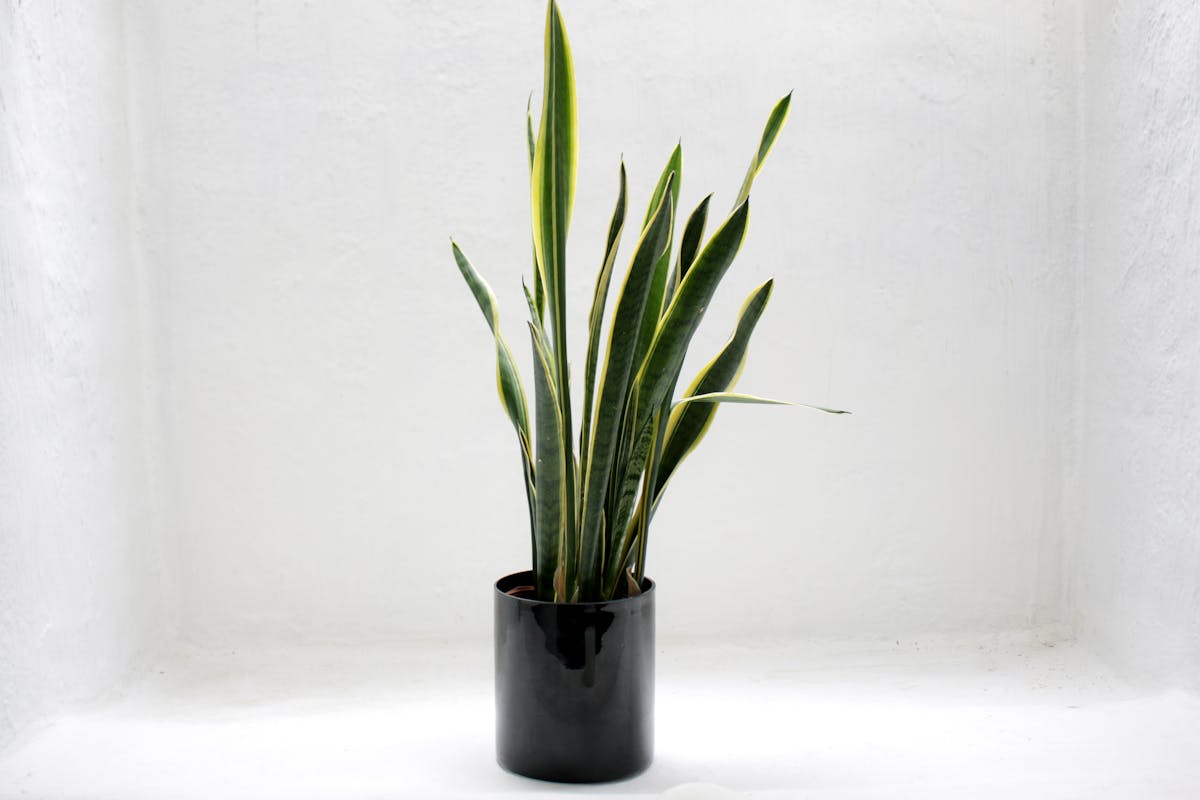
Snake plant is classified as a monocot — class Liliopsida — and this single fact explains several of the plant's physical and biological characteristics.
Monocots germinate with a single seed leaf (cotyledon), which is where the name comes from. They have parallel leaf venation, as opposed to the branching net-like venation of dicots. Their floral parts come in multiples of three. Their vascular bundles — the internal plumbing that carries water and nutrients — are scattered throughout the stem rather than arranged in a ring, as in dicots.
For a snake plant owner, the monocot classification explains why the leaves have that characteristic parallel ridge pattern when you run your finger along one. It also explains why the plant shares structural and care similarities with other monocots you might own — agaves, bromeliads, and some grasses — more than it resembles a geranium or rose.
Where Snake Plant Comes From: Native Range and Habitat
This is one topic most taxonomy guides skip — and it is worth including, because the native habitat explains a great deal about what the plant needs indoors.
Dracaena trifasciata is native to West and West Central Africa: Cameroon, Nigeria, Congo, Gabon, and Equatorial Guinea are all part of its natural range. In the wild, it grows in rocky, dry tropical environments. Not rainforest. Not shade-dappled forest floor. Rocky, well-drained ground in tropical climates with distinct wet and dry seasons.
That habitat is why the plant stores water in its thick leaves, why it tolerates drought far better than most houseplants, and why it prefers a well-draining substrate to standing moisture. It has evolved to survive irregular rainfall — not to sit in constantly wet soil. Overwatering, which remains the number one cause of death for this plant, is essentially the opposite of every environmental condition it adapted to over thousands of years.
The plant's native range also explains its temperature tolerance. It does well between 55°F and 85°F (13°C–29°C). Below 50°F (10°C), it starts to suffer. In its native range, it never encounters frost. Indoors, keep it away from cold drafts and air conditioning vents.
What the Reclassification Means for You (Practically)
If you own a snake plant, the short answer is: nothing changes about how you care for it. The plant your grandmother called a sansevieria and the one your nephew's nursery labels as a dracaena are the same organism.
The reclassification does matter in one specific practical context: propagation. Several commonly repeated guides online mix up Dracaena trifasciata cultivar propagation rules with those for other dracaena species. The core rules for D. trifasciata remain:
- Leaf cuttings work for plain-green varieties but take 4–8 weeks to root — patience matters.
- Division is faster, more reliable, and the only method that preserves variegation in cultivars like 'Laurentii.'
- Pups (offshoots from the rhizome) can be separated once they reach at least 3–4 inches tall.
Understanding that 'Laurentii' is a chimeric cultivar of Dracaena trifasciata — not a separate species — helps make sense of why propagation rules differ. For a detailed breakdown of how the plant is structured botanically and what its leaf anatomy means for care, the Sansevieria Plant Botanical Guide covers the mechanics in full.
The APG IV System: Why Taxonomy Keeps Changing
The 2017 reclassification was not an isolated event. It was part of a broader, ongoing revision of plant taxonomy under the APG (Angiosperm Phylogeny Group) system — now in its fourth revision, APG IV — which provides the internationally accepted framework for flowering plant classification based entirely on molecular DNA data.
Under this system, many plant families and genera that were defined by physical appearance have been merged, split, or reorganised as DNA evidence reveals their true evolutionary relationships. The Asparagaceae family itself grew significantly through APG revisions, absorbing several former families including Agavaceae and Hyacinthaceae.
The practical implication: plant names in scientific literature and reputable databases will continue to update as research advances. This is not scientists being indecisive. It is the system working correctly — correcting centuries of classification done without access to the genetic data that actually determines evolutionary ancestry.
If you want to follow these updates, the Plants of the World Online database at Kew Science is the authoritative source. It lists accepted names, synonyms, and the full taxonomic history for every plant species.
The name on your plant tag may say "Sansevieria." The scientifically correct name is "Dracaena." The plant does not care either way — it just needs good drainage and indirect light. Start with checking whether the soil is bone dry before you water next, and you will have already solved the most common problem this plant encounters, whatever you call it.
Care FAQ
What is the scientific name of snake plant?
The current accepted scientific name is Dracaena trifasciata. The former name Sansevieria trifasciata is now a synonym and is botanically superseded, though it remains in widespread use at nurseries.
Is sansevieria now called dracaena?
Yes. Following a 2017 taxonomic revision supported by molecular DNA data, all species formerly in the genus Sansevieria were merged into Dracaena. Dracaena is now the valid and accepted genus name for all snake plants.
Why did sansevieria change to dracaena?
DNA analysis showed that Sansevieria was genetically nested inside Dracaena, making the old separation taxonomically invalid. To maintain a scientifically accurate, monophyletic classification, the two genera were merged under the older, priority name: Dracaena.
What family is snake plant in?
Snake plant belongs to the family Asparagaceae, within the order Asparagales. This places it alongside asparagus, hostas, agaves, and many other familiar garden and houseplants.
Is sansevieria part of the dracaena genus?
Yes. All former Sansevieria species are now classified within the Dracaena genus. There is no longer a separate Sansevieria genus in accepted botanical taxonomy.
What are the types of snake plants?
The main types include Dracaena trifasciata (common snake plant), Laurentii (yellow-edged), Hahnii (bird's nest), D. angolensis (cylindrica), D. zeylanica, and Moonshine. These cover a range of growth habits, leaf shapes, and variegation patterns.
Does reclassifying sansevieria as dracaena change how I care for it?
No. The plant is biologically identical. The reclassification is a naming correction based on DNA evidence, not a change to the plant itself. Every care guide written under the name Sansevieria trifasciata still applies fully to Dracaena trifasciata.