
How Do Snake Plant Leaves Store Water?
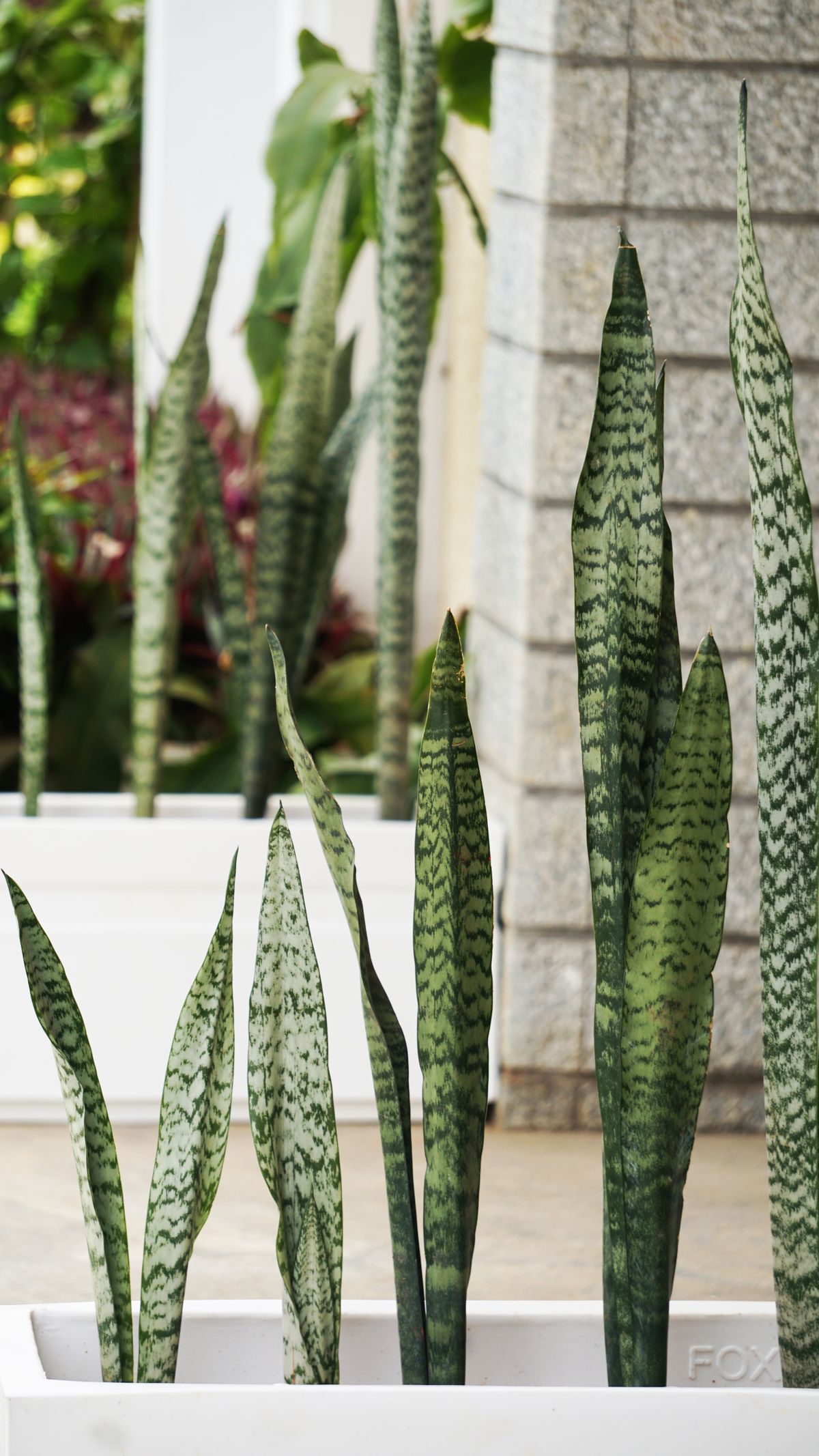
Snake plant leaves store water in hydrenchyma — a colorless tissue of large, thin-walled cells occupying the leaf's interior, distinct from the green photosynthetic tissue surrounding it. These cells hold water and release it gradually as internal pressure drops. But this storage tissue is not just a drought-emergency tank — it trades water with the leaf's photosynthetic tissue every single day as part of the plant's normal CAM cycle, whether or not the plant is anywhere near dry.
Most care guides describe this water storage the same way they would describe a camel's hump: a reserve tapped only in an emergency. That framing misses most of what is actually happening. (For where this water-storage tissue physically sits relative to the leaf's other layers, the Snake Plant Leaf Cross-Section guide maps the full structure; this article covers specifically how the storage mechanism works.)
How Do Snake Plant Leaves Store Water, Exactly?
The storage tissue is hydrenchyma: large, thin-walled, mostly colorless cells that fill much of the leaf's interior, distinct from the green chlorenchyma ring around them. These cells are not doing photosynthesis — their entire job is holding water in their internal vacuoles and releasing it as needed. The property that makes this work is called hydraulic capacitance: how much a cell's volume changes for a given change in internal water pressure. A tissue built from large, elastic-walled cells like hydrenchyma has high capacitance, meaning it can lose a substantial amount of water while the leaf's overall structure changes only gradually, rather than collapsing the moment water gets scarce.
The Part Most Guides Skip: A Daily Exchange, Not Just an Emergency Fund
Here is the genuinely interesting mechanism that gets left out of almost every care guide. Recent research on CAM leaf physiology describes an active water exchange between the hydrenchyma and the chlorenchyma that happens as part of the plant's ordinary day-night cycle, not only during drought. At night, when stomata open and the photosynthetic chlorenchyma cells are actively taking up CO₂, they draw on adjacent hydrenchyma cells for extra water support. During the day, as conditions shift, some of that water moves back. The two tissues are functionally connected, continuously trading water back and forth rather than one simply sitting in reserve while the other does all the work.
This reframes what "water storage" actually means here. It is not inert savings waiting for a crisis. It is an active, working buffer the plant leans on every single day to keep its CAM cycle running smoothly, with drought simply being the condition where withdrawals start outpacing what gets replaced.
There is a concrete reason nighttime CO₂ uptake specifically needs that water support. Opening the stomata at night requires the guard cells surrounding each pore to swell with water pressure to physically pull the pore open — the same turgor mechanism that keeps the whole leaf firm, just operating at the scale of a single pair of cells. A leaf running low on internal water has a harder time fully opening its stomata each night, which is part of why a plant left too dry for too long eventually shifts into the far more conservative CAM-idling mode described in the CAM Photosynthesis in Sansevieria guide — the water shortage is not just a leaf-firmness problem, it is a direct constraint on the gas-exchange machinery itself.
Mucilage: The Extra Water-Holding Trick Inside the Cells
Beyond the cell volume itself, many succulent water-storage tissues — hydrenchyma included — boost their water-retentive capacity further by secreting polysaccharides into the spaces between cells, forming a gel-like substance called mucilage. This mucilage holds additional water outside the cells themselves, in the space between them, adding storage capacity beyond what the cell vacuoles alone provide. It is the same general category of substance that makes aloe gel feel slippery and viscous — a related succulent strategy for holding onto water using more than just cell volume.
Why Leaf Shape Changes How Much Water Gets Stored
A leaf's shape has a direct, physical effect on its storage efficiency. A low surface-area-to-volume ratio means more internal storage volume relative to the surface exposed to drying air — the same principle behind why a large water balloon holds relatively more water per unit of surface than a flat sheet of the same material. This is one reason cylindrical varieties such as Dracaena angolensis tend to be even more drought-resilient than flat-leaved types: more stored volume, proportionally less surface losing water to the air at any given time. A comparative look at how this plays out between flat and cylindrical sansevieria leaf types is a large enough topic on its own.
Related genus research backs up how significant this basal and internal storage capacity can be — studies on Dracaena draco, a close relative of sansevieria, found the water-storage tissue concentrates heavily at the leaf base, forming what researchers describe as "a massive water reservoir" that visibly changes in volume with the plant's water status, sometimes creating visible gaps between leaves as it contracts under drought stress.
Why This Is Why the Leaf Stays Firm for Weeks
This is the practical payoff of the whole mechanism. A snake plant leaf feels firm right after watering and stays that way for a genuinely long time — 2-6 weeks in spring and summer, 4-8 weeks in winter — precisely because the hydrenchyma releases its reserve gradually rather than all at once, and because the CAM cycle described above only draws modestly on that reserve during ordinary daily operation. Firmness is essentially a readout of how much water remains in that internal tank. A leaf only starts to soften or wrinkle once the reserve has been drawn down substantially, which is exactly the mechanism the Why Do Snake Plant Leaves Become Wrinkled? guide covers in full, including the reinforced cell-wall bands that make the shrinkage controlled rather than random.
Does All This Storage Capacity Mean You Can Water More Often?
No — if anything, it means the opposite, and this is worth correcting directly since the logic seems to point the other way at first glance. A leaf this well-equipped to store and ration water does not need frequent top-ups; it needs the soil to actually dry out between waterings so the roots are not sitting in excess moisture they have no use for. The hydrenchyma's whole purpose is covering the gap between infrequent waterings. Watering more often than every 2-6 weeks in summer or 4-8 weeks in winter does not help this tissue do its job better — it just keeps the roots wet longer than they are built to tolerate, which is the single most common cause of death in this plant. The storage system is a reason to trust longer gaps between waterings, not a reason to shorten them.
For the complete internal leaf structure this storage tissue belongs to, the Sansevieria Plant Botanical Guide and the Sansevieria Trifasciata guide cover the species in full.
Press a leaf gently right now: firm and slightly springy means the hydrenchyma is well stocked. If it gives more than usual, that is your actual watering signal — more reliable than counting days on a calendar.
Care FAQ
How do snake plant leaves store water?
In hydrenchyma — a colorless, achlorophyllous tissue made of large, thin-walled cells occupying the leaf's interior. These cells hold water in their vacuoles and expand or contract in volume depending on how full they are, a property called hydraulic capacitance. The leaf's low surface-area-to-volume ratio also limits how quickly that stored water is lost to the outside air.
Is the water storage tissue only used during drought?
No, and this is the part most guides skip. Hydrenchyma exchanges water with the leaf's photosynthetic tissue (chlorenchyma) every day as part of the normal CAM cycle, not only when the plant is drought-stressed. Storage and use are a continuous, routine process, with drought simply drawing down the reserve faster than it can be replenished.
How much water can a snake plant leaf actually hold?
There is no single universal figure, since it scales with leaf thickness and size, but the storage capacity is substantial relative to the leaf's size — enough that a healthy plant can go 2-6 weeks between waterings in spring and summer, and 4-8 weeks in winter, drawing on this internal reserve the entire time without visible stress.
Why do snake plant leaves feel firm even weeks after watering?
Because the hydrenchyma cells stay turgid — full of water under internal pressure — for an extended period, releasing water gradually rather than all at once. Firmness is a direct readout of how much reserve remains in that internal tank; a leaf only starts to feel soft or wrinkled once that reserve has been drawn down substantially.
Does leaf shape affect how much water a snake plant can store?
Yes. A cylindrical or thick, channel-shaped leaf has a lower surface-area-to-volume ratio than a thin, flat one, meaning more internal storage volume for the same amount of leaf surface exposed to drying air. This is one reason cylindrical varieties like Dracaena angolensis tend to handle extended drought especially well.
Can a snake plant leaf recover after its water storage is fully depleted?
Usually, yes, if watered before the depletion becomes severe. A leaf that has wrinkled from water loss typically firms back up within 2-3 days of thorough watering, since the hydrenchyma refills quickly once water is available. Prolonged, severe depletion over many weeks can leave some permanent softness even after rehydration.